

Lecture Recap and Video: Beth M Weinstein on Rendering Sensible (In)Visibilities Around Architectures of Internment
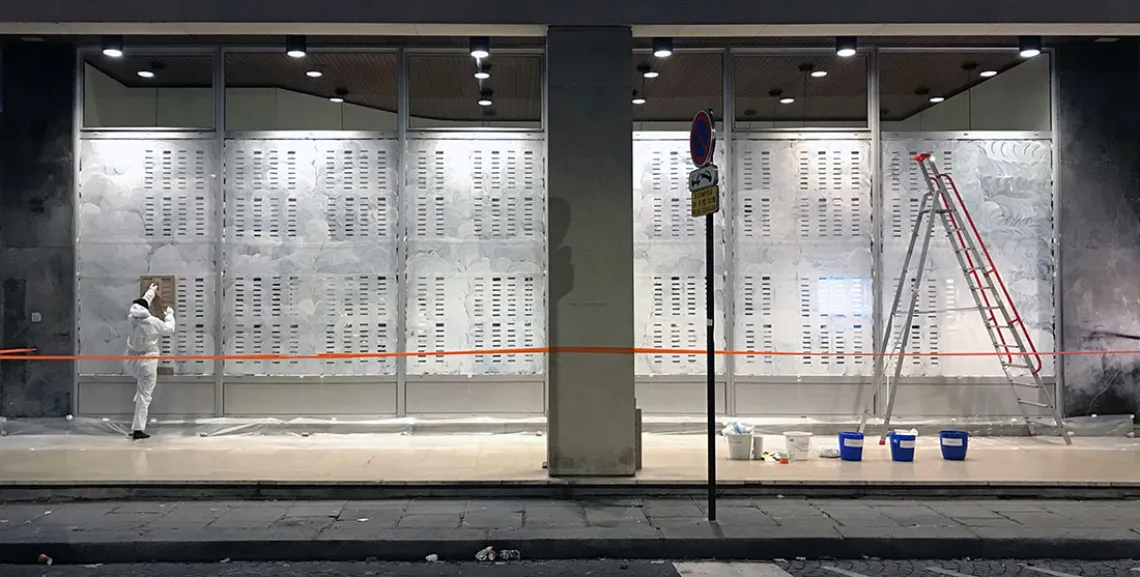
Photo by Anna McGrath.
Beth M Weinstein PhD is associate professor at the University of Arizona and an architect moving between architectural, art and performance practices.
Her recent practice-based research correlates two seemingly unrelated forms of invisibility—hidden architectural labor and invisibility perpetuated through spaces of internment. Through performance-installations employing text-iles, architectural drawing/erasing, and (un)modeling, she explores making the internment camps’ (in)visibility sensible, or knowable through the senses.
Two case studies of razed camps framed the project. The first examined four Japanese American internment camps in the American West mandated by Executive Order in which interned citizens wove camouflage for the US Army. The second investigated, and digitally reconstructed, the obfuscated Centre d'Identification de Vincennes formed under France’s State of Emergency Law to detain Algerians during their war of independence.
Weinstein’s embodied, situated and archival research revealed several protagonists. Their labor, and the camps’ spaces, traces, and atmospheres, informed the performance-installations she discusses in her lecture, and their constitutive choreographies and materialities that oscillated between the hyper-visible and barely detectable.
Weinstein's lecture was part of the School of Architecture Lecture series and CAPLA Lecture Series.


