

Advice for Aspiring Architects (from an Aspiring Architect): Gustavo Antonio Noriega ’20 B.Arch
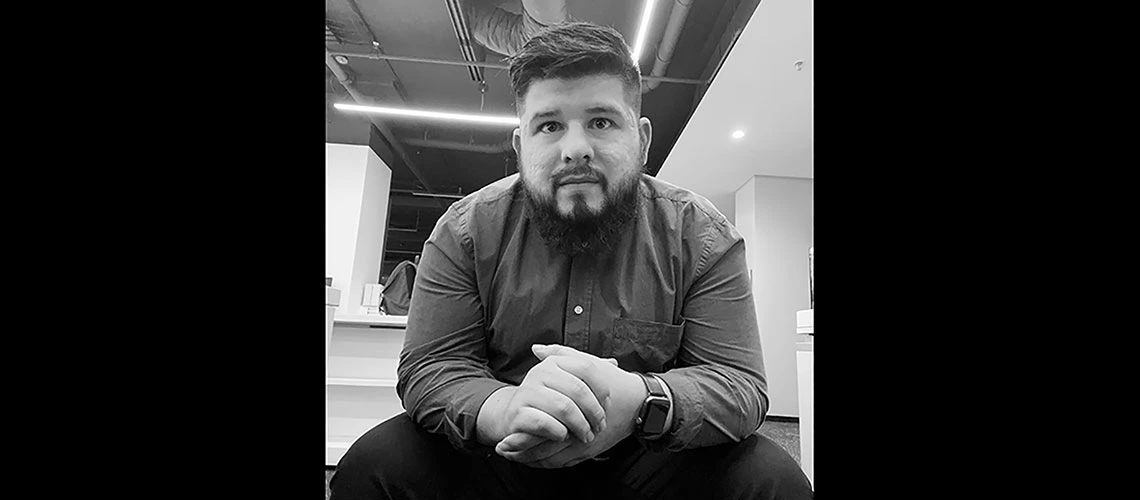
Gustavo Antonio Noriega '20 B.Arch, Design Professional, HOK, Washington, D.C.
“For me, it’s the iterative process of designing that motivates. I always have the itch to go back to studio and keep developing a project. To create experiential spaces for people through that transformational work is very rewarding.”
Gustavo Antonio Noriega, who grew up in Sinaloa, Mexico, East Los Angeles and Tucson, graduated with his Bachelor of Architecture from the University of Arizona in May 2020, at the height of the pandemic and following a sudden switch to online courses. He took advantage of his time at CAPLA to experience architectural firms both small and large, helping him learn—only a year and a half out of school now—his best fit.
Noriega is a design professional at HOK in Washington, D.C. He currently works with design principal Todd Bertsch and project architect Syve-Roy Grant on the design for the Orlando Health Children’s Pavilion in Florida.
In this interview, he offers advice to those just starting out in the architecture program, as well as those looking for their first jobs as they prepare for graduation.
What brought you to the University of Arizona and Bachelor of Architecture program?
I am a first-generation college student, and hadn’t considered attending college until my high school required me to submit college applications to several schools. After visiting the University of Arizona campus and applying, I was admitted to the pre-pharmacy program and decided to attend.
One day my freshman year I cut through the Sundt Gallery and saw pin-ups from architecture students. They were fascinating, so I looked into the program. Because I already drew and painted, I realized that the Bachelor of Architecture degree could combine my creativity with my technical abilities. I found my way.
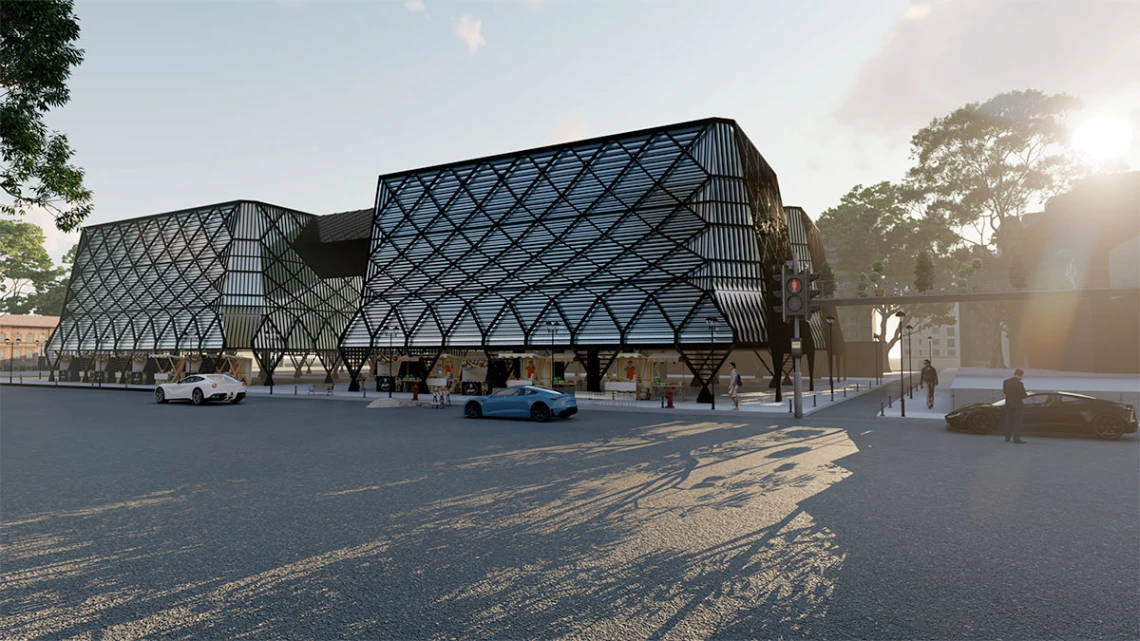
La Lagunilla Community Center, B Arch capstone project by Gustavo Antonio Noriega.
What did you find most challenging at CAPLA?
A lot! Those five years demand so much of you. The workload was something that I struggled to manage correctly at first and I soon realized that I needed to really focus to live up to the challenge. I had to remain in the right mindset in order to come out the other side, but I stuck with it, maturing as a person and a student. It’s unnerving when you see so many classmates change their majors after just one semester. You have to be tenacious.
I also feel that academia is tailored for a certain type of individual. I worked full-time as a medical driver for an EMT company. I would get up at 2 or 3 o’clock in the morning for work and get to class by 10 a.m. It was a tough balance and impacted my work. I wasn’t at the top of my class, but I worked hard to get it all done.
Tell us about your transition from CAPLA to your architecture career with HOK.
The transition from school to the workforce was smooth. I knew how to use all the programs and I felt that I had prepared myself for an opportunity like this. I did the work, had the skills and had gained the necessary experience. The bigger hurdle was the transition of moving and relocating to the East Coast without my family.
Due to the pandemic, when I joined HOK’s D.C. office I worked remotely, just like the other HOK employees. I missed the studio culture and the connectivity that you get when working in-person with a team. That distance has slowed the process of learning and getting to know other’s work styles, as well as how I adjust my skills to match theirs.

Library, by Gustavo Antonio Noriega.
What advice do you have for those just starting out in the architecture program?
Architecture is a deeply time-consuming degree. For first-year students working their way through the Foundation program, if you don’t have that itch to go back to studio after that first year, then don’t. If you’re not fully committed, it’s not the right degree for you.
For me, it’s the iterative process of designing that motivates. I always have the itch to go back to studio and keep developing a project. To create experiential spaces for people through that transformational work is very rewarding. Make sure you have that itch.
For those who do continue on, you don’t need to be the best student to have high-quality work. There are always factors at play, and everyone’s situation is different. For instance, I had my first son the first semester of my fifth year, as I began work on my capstone. That was extremely challenging, but I made it work. He is now two, and his younger brother is eight months old.
What are your recommendations for preparing to find the right architecture job?
The goal is a job at the end of five years. I think the biggest obstacle in meeting that goal is branding yourself and making a portfolio that illustrates your technical skills and background, so put time into your portfolio.
I also recommend doing as many interviews as possible and to not be afraid of applying to the larger firms in and out of state. Take initiative to put your name and work out there. I got my second internship at Hilliard Architects in Oakland, California by cold-calling the CFO and setting up an interview. After the summer ended, I worked remotely for Hilliard for seven more months on healthcare projects for their client Kaiser Permanente.
The more interviews you have, the better you are prepared for the next interview. That’s why it’s important that you participate in the CAPLA Job Interview Fair—though it’s also important to reach out to firms on your own. Many students, because of their financial situation or work obligations, don’t look for internship opportunities, which would be less of an issue if more internships were paid.
I also had the opportunity to participate in a one-week shadowing program at SOM in Chicago. I was nominated along with another student by Arquitectos. I was able to talk with Ingedia Sanchez of SOM, an amazing mentor and community leader. She is the first licensed female architect to be the president of Arquitectos. She worked on the design team for the Burg Khalifa—the world’s tallest building. Even after my week at SOM, she mentored me and provided guidance on my resume and portfolio.
Through all this, what I’ve learned from my interviews and internship experiences is that firms want someone who can clearly communicate a project. The more experience you have talking to people in the industry, the better prepared you will be for the big interviews—and the projects that follow.

Transit Center model by Gustavo Antonio Noriega. Photo by Jerrick Lee Tsosie.
What has been your experience in small design firms versus larger firms?
School teaches you how to be a problem-solver and critical thinker. Using those skills, we develop a sense of what is possible architecturally. At a small firm I felt limited creatively, even as I gained valuable technical knowledge on how projects develop.
My advice to others, therefore, is to test the waters with different firm sizes. The defining factors for me are the project scale and resources a firm like HOK can provide. I wanted to work with a bigger firm because I want to build skyscrapers and world-class buildings one day; large firms can handle that scope of work. But you may have other priorities. Working with different firms helps you find your best fit.


