

Future Trajectories: Athena Myers '21 M.Arch
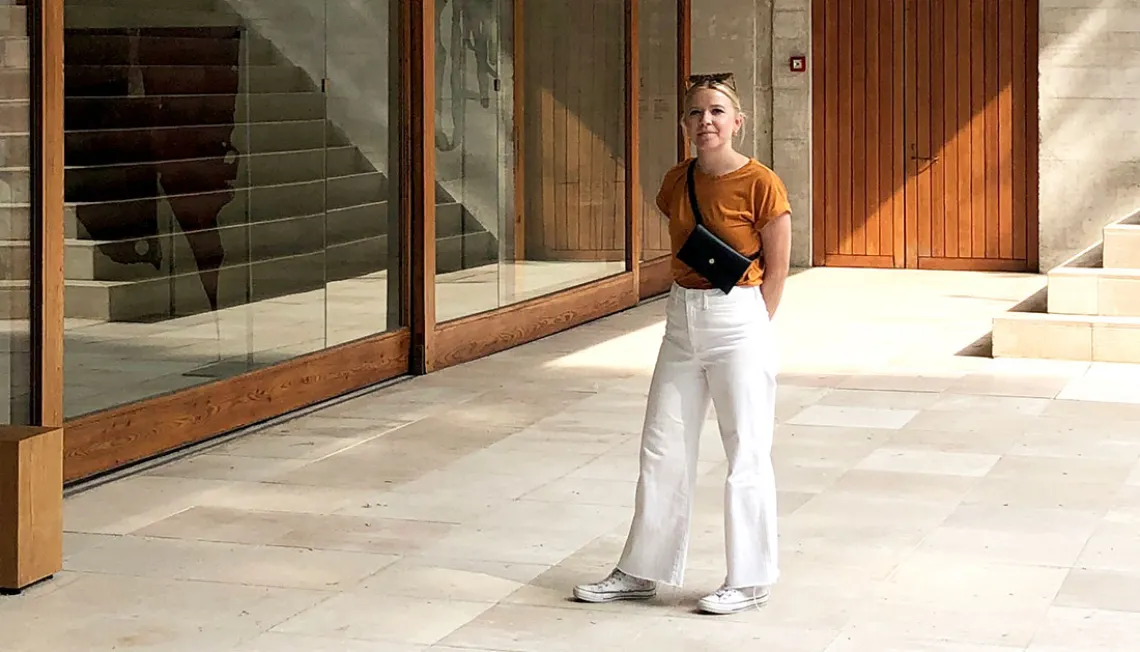
Seven Questions with Master of Architecture Student Athena Myers
"What excites me is the potential for new technologies and fabrication methods to empower people to reclaim and rebuild their cities in ways that better serve themselves and their communities."
Athena Myers, who is from Tucson, entered CAPLA's Master of Architecture program after receiving her undergraduate degree in design studies from Arizona State University. Prior to joining CAPLA, she spent a year in Portland, Oregon, before moving back to Tucson where she worked as a manager in an advertising agency.
What brought you to the University of Arizona to study architecture?
I was born and raised in Tucson and felt a strong pull to come back home and study architecture in this unique and beautiful desert where I grew up.
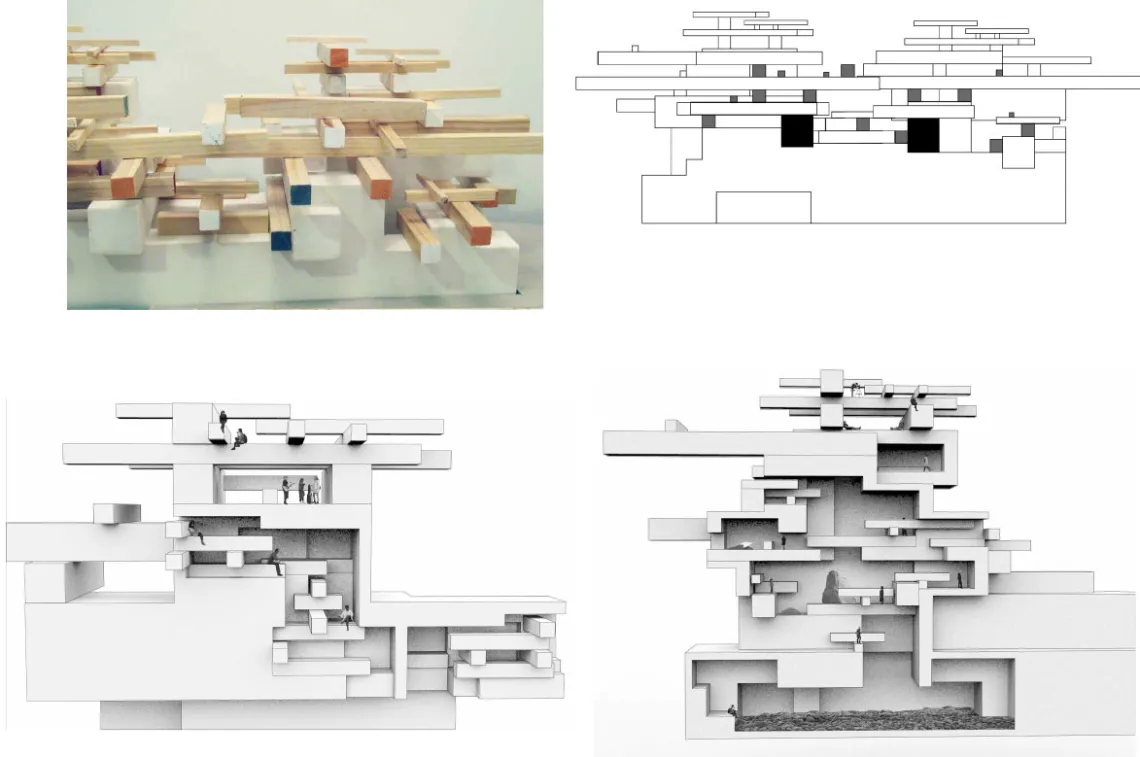
Master of Architecture work by Athena Myers.
What areas of architecture or architectural research are you interested in?
I am interested in a diverse range of research which includes material exploration and fabrication, new technologies and social equity. What excites me about these areas is their potential to employ new technologies and fabrication methods to empower people to reclaim and rebuild their cities in ways that better serve themselves and their communities.
What do you like best about the M.Arch program and the College of Architecture, Planning and Landscape Architecture?
I am constantly impressed by the support of the faculty, students and community at CAPLA. In my experience, people have always been available to help me realize my ideas, no matter how difficult they may seem. Whether it is a new skill, access to resources or just a second set of eyes, people are more than willing to share their time and knowledge.
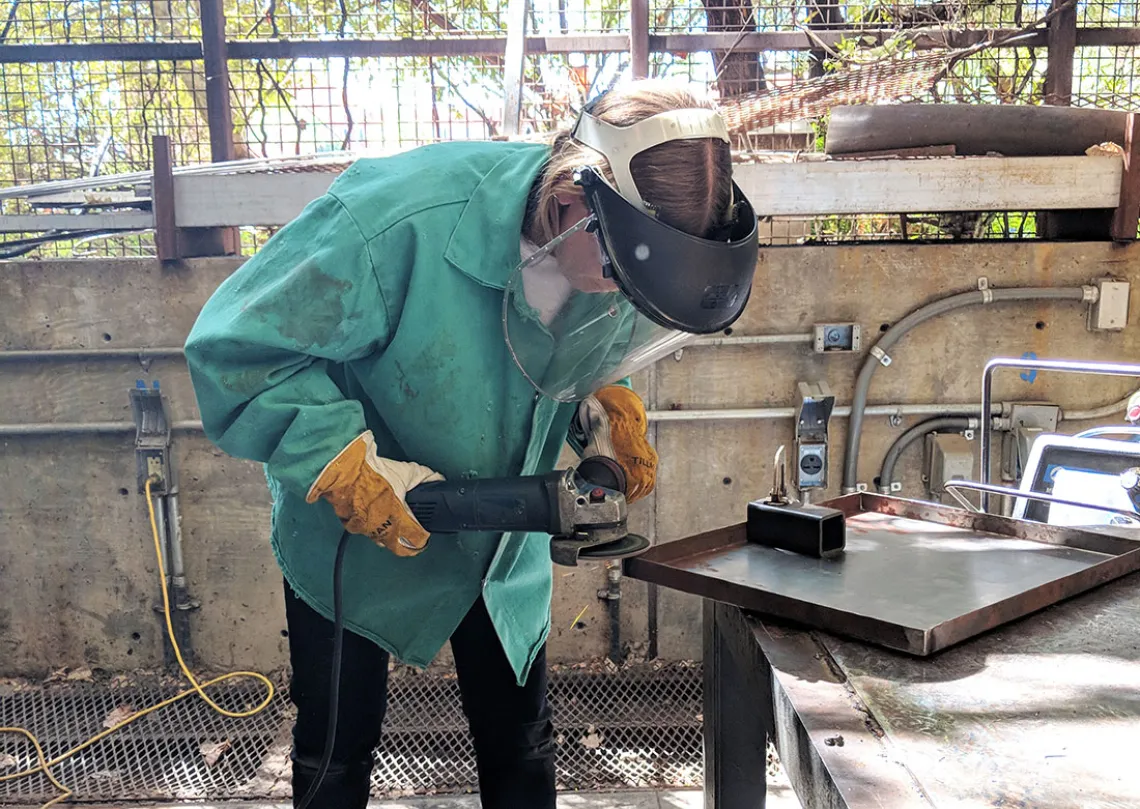
Athena Myers in the CAPLA shop.
What has been your biggest challenge at CAPLA, and how have you overcome that challenge?
I don’t have a background in architecture, my undergraduate degree is in design studies, so the biggest challenge I’ve had to overcome is believing in myself and my work. I believe that not having four years of architecture behind me has pushed me to be more ambitious and has also given me a distinct perspective in the program.
What does the CAPLA experience mean for you?
CAPLA is a place where I can experiment and ask big questions in a stimulating environment. It is a place with so many tools and resources to truly learn through making. And most importantly, it is a place where I can collaborate and conspire with colleagues who I admire.
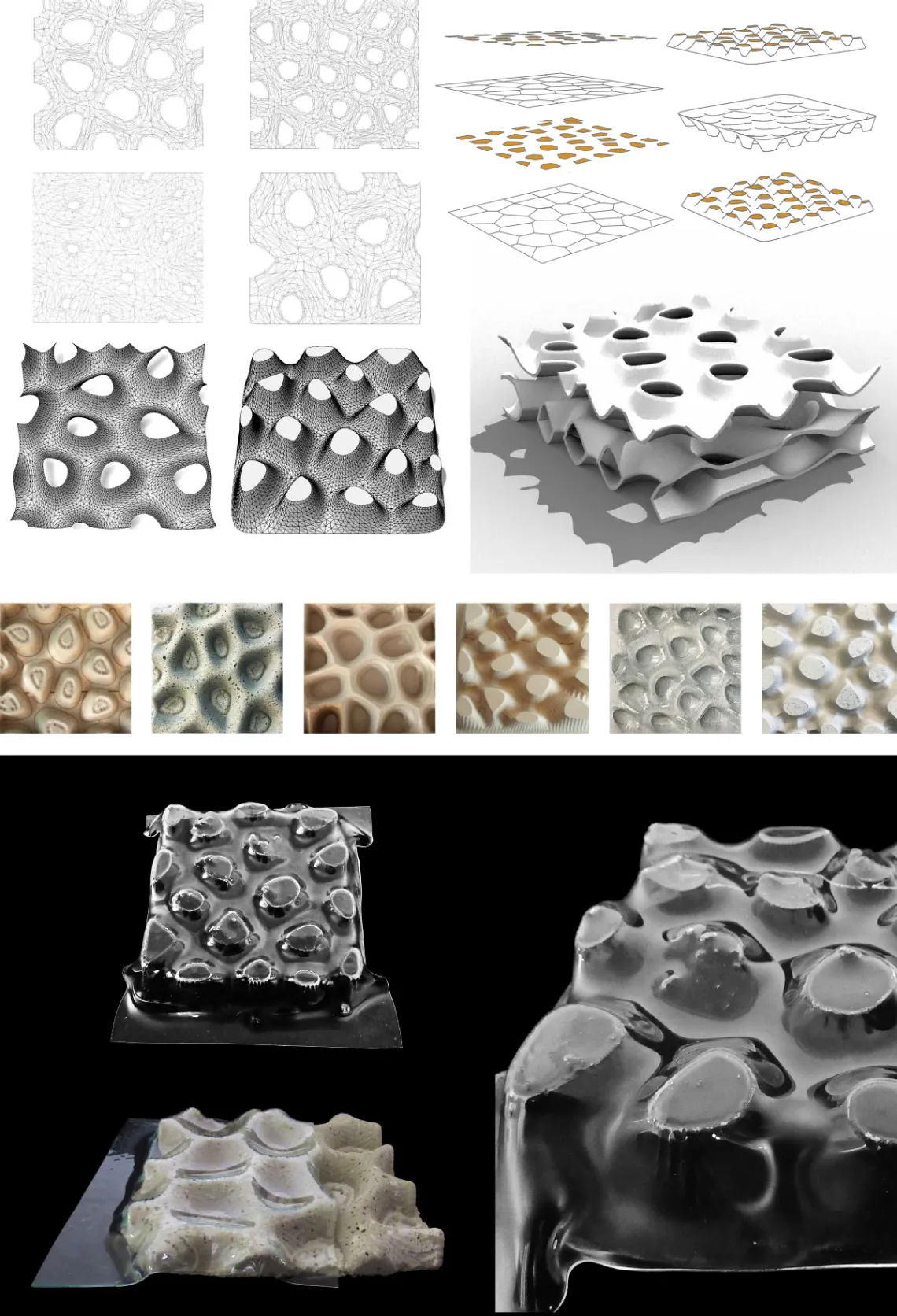
A study in forms and fabrication by Athena Myers.
Tell us about your job experience and career aspirations.
Unfortunately, because of COVID-19, I was not able to secure a summer internship. But I have been able to work on small projects with professors and committees outside of classes, which has been a rewarding experience with opportunities to work with real stakeholders. In the future, I would like to work somewhere (not necessarily an architecture firm) that welcomes cross-disciplinary collaboration and new technologies in their work.
What advice do you have for prospective M Arch students?
Be true to yourself—in your work and in your aspirations. The field of architecture needs more diverse voices, backgrounds and perspectives as well as future trajectories. What architecture is, what it means, how it comes to be, etc. are all up for interpretation and exploration through your academic and professional career.


