

A Focus on Emerging Building Technologies: Maryam Moradnejad '20 MS Arch

Seven Questions with Master of Science in Architecture Student Maryam Moradnejad
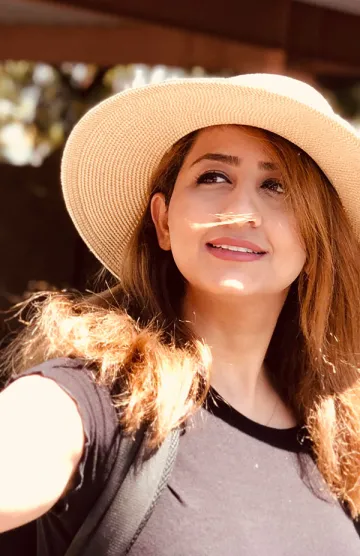
Maryam Moradnejad, who is from Kerman, Iran, entered CAPLA's Master of Science in Architecture program after earning her Bachelor of Architecture and Master of Construction Management in Iran.
What brought you to the University of Arizona to study architecture?
I was looking for an innovative, up-to-date graduate program and I learned about the new master’s program area of focus in emerging building technologies at the University of Arizona so I decided to apply for that! Also, two of my best friends from high school were CAPLA students, so I knew about CAPLA’s great facilities, shops and faculty.
What are your primary research areas in architecture and the built environment?
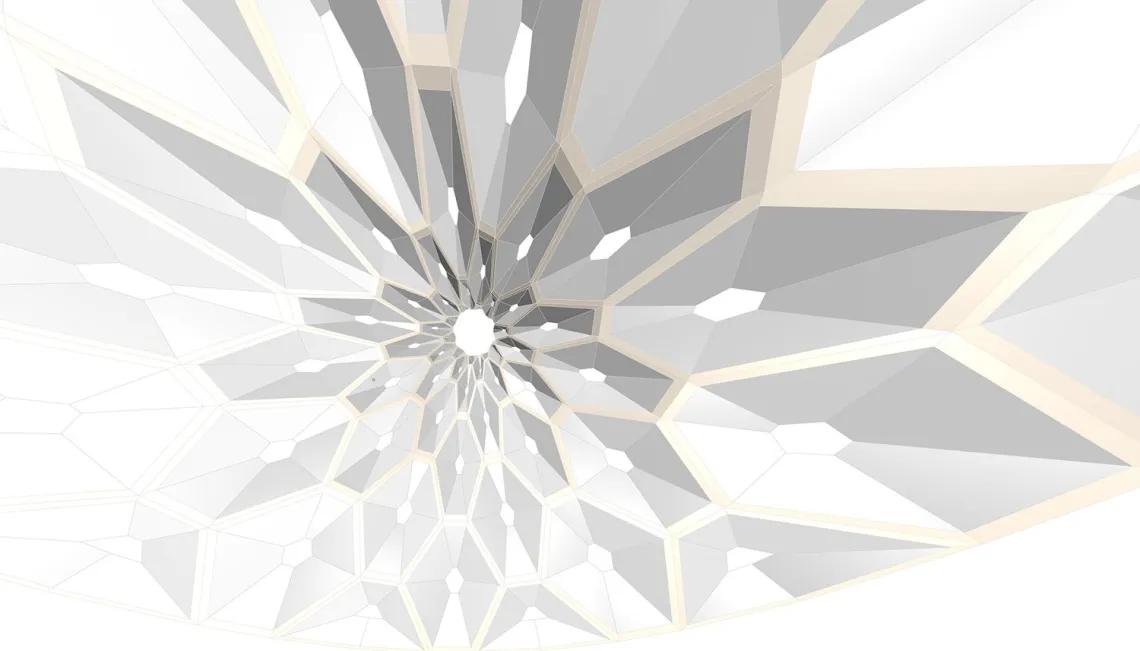
I have two primary areas of research: integration of innovative environmental building technology designs with advanced materials, and the relationships between airflow stream thermodynamics, geometry and materials.
What do you like best about the MS Arch program?
I like the potential you have in the MS Arch for conducting diverse research and learning design techniques under the supervision of faculty who have a variety of knowledge areas.
What has been your biggest challenge at CAPLA, and how have you overcome that challenge?
Fortunately, I did not have a big challenge at CAPLA; just being far from my family made for some rough times, though support by faculty members, staff and students made it easier.
What does the CAPLA experience mean for you?
It means a lot. I’ve had really good times there. I made lots of friends from all over the world. The professors supported me in all aspects of my studies. CAPLA has been my second home and I will always keep it in my heart.
What internships or other job experience do you have, and what are your career aspirations?
I worked as research assistant and teaching assistant during my studies and both of them added a lot to my knowledge and experience. Also, during my last semester I started my internship and after my graduation I have continued working at the firm as a BIM designer.
What advice do you have for prospective MS Arch students?
You will only have three to four semesters at CAPLA, so take this opportunity to use all the great school’s facilities, such as the Materials Labs. Don’t limit yourself just to the CAPLA building. There are lots of wonderful places around campus to visit and relax. Enjoy every second of being at CAPLA, because one day you will miss it!
Image Gallery
Click a thumbnail below to view a larger image and begin slideshow of Maryam Moradnejad's evaporative cooling research and design:
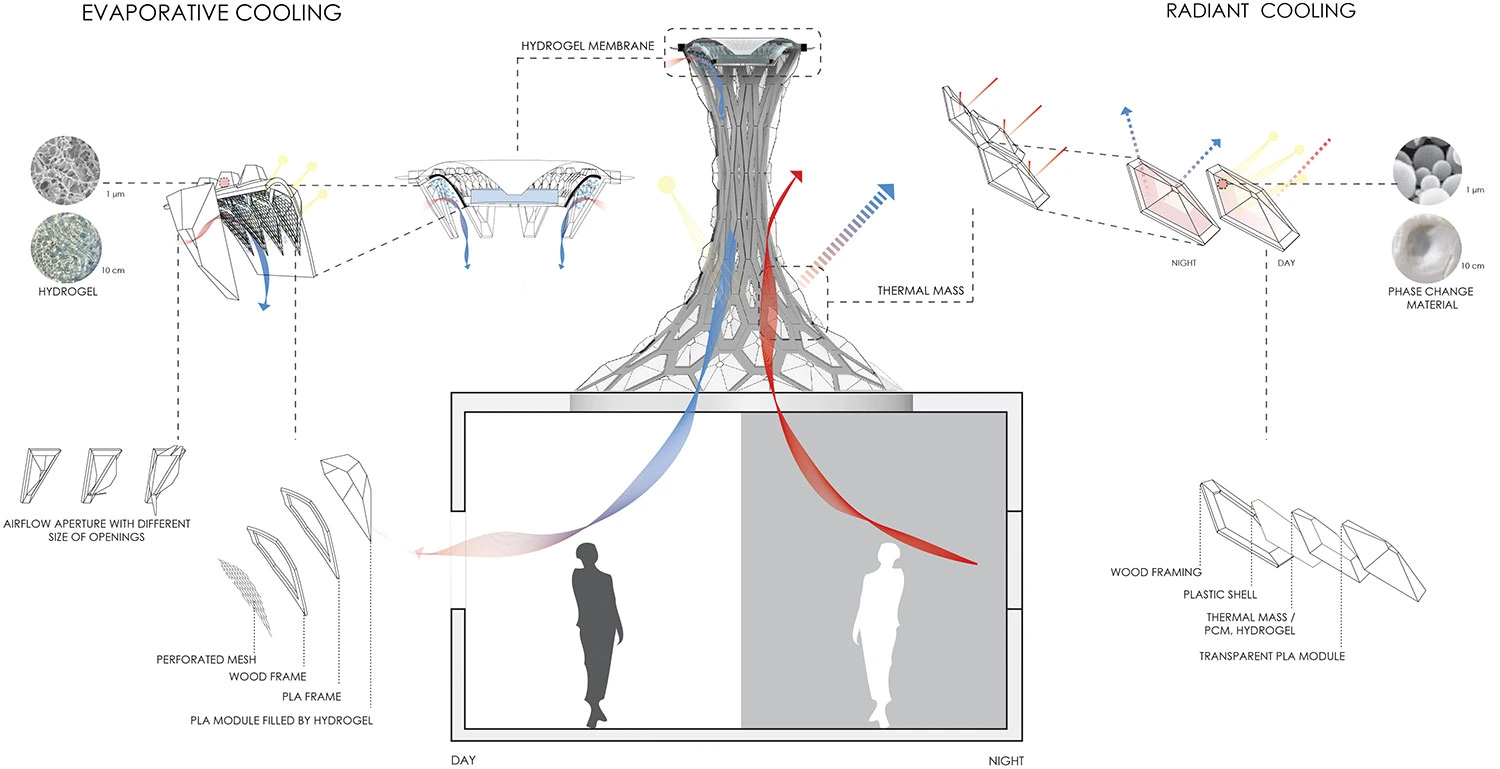


All images are by Maryam Moradnejad and may not be used or reproduced without express written permission of their creator.


