

Persistence is Key: Tulga N. Ericson '21 B.Arch

Seven Questions with Bachelor of Architecture Student Tulga N. Ericson
“Persistence is key! But this does not mean work until you’re exhausted. Take care of yourself and don’t jeopardize your health.”
Tulga Ericson, who is originally from Mongolia but moved to Arizona nine years ago, entered CAPLA's Bachelor of Architecture program after knowing he could stay in Tucson to attend an outstanding undergraduate architecture program.
What brought you to the University of Arizona to study architecture?
My family and I have been in Tucson since 2011. It was one of the few amazing schools available so I decided to stay in Tucson and attend school here.
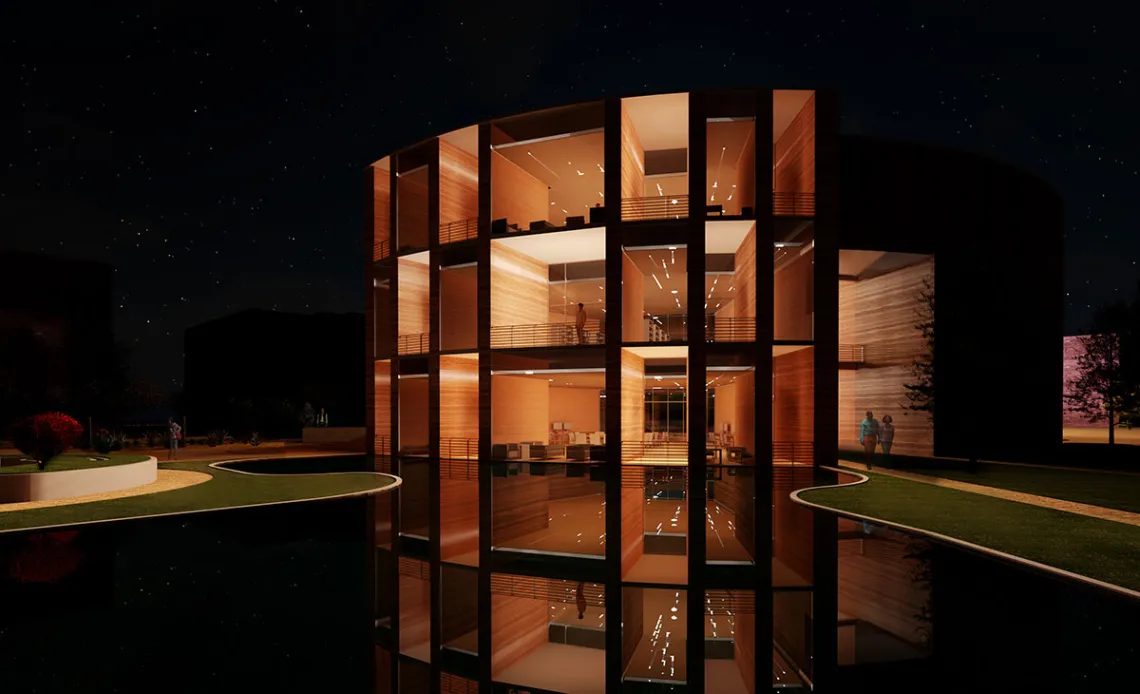
Rendering by Tulga N. Ericson.
What area of architecture most interests you?
Biomimicry has become really interesting to me because the way individual organisms work and how they function. It has not only inspired architecture, but other disciplines, as well.
What do you like best about the B.Arch program and College of Architecture, Planning and Landscape Architecture?
The ability to use the workshop and the Materials Lab is fantastic! Not only for school projects, but personal projects too.
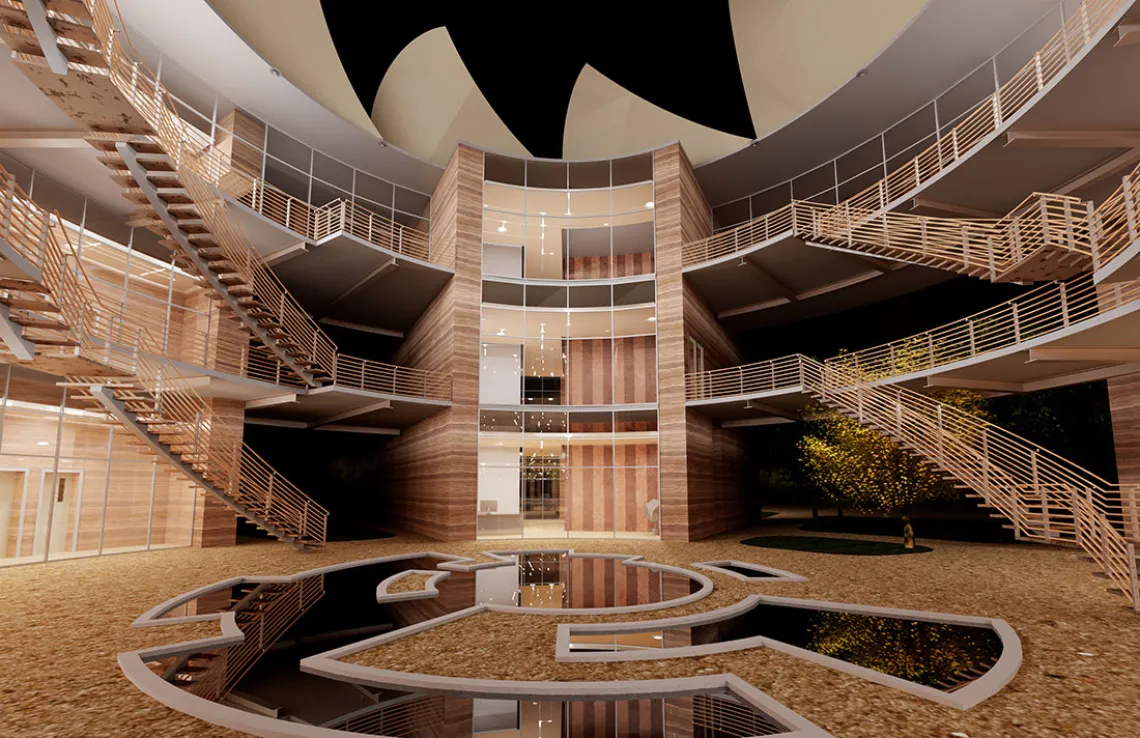
Rendering by Tulga N. Ericson.
What has been your biggest challenge at CAPLA, and how have you overcome that challenge?
You’ll hear the phrase “time management” and “keep working” a lot. That’s true, but it’s much easier said than done. Try to overcome that. Your projects are not going to finish by themselves. Persistence is key in architecture. Working part-time and doing schoolwork at the same time is a challenge. Time management is crucial and it’s something I learned the hard way. Taking small breaks in between has helped me.
What does the CAPLA experience mean for you?
The CAPLA experience has been robust but very challenging. It definitely had its ups and downs, but going through that experience has helped me prepare and be ready to take on new challenges.
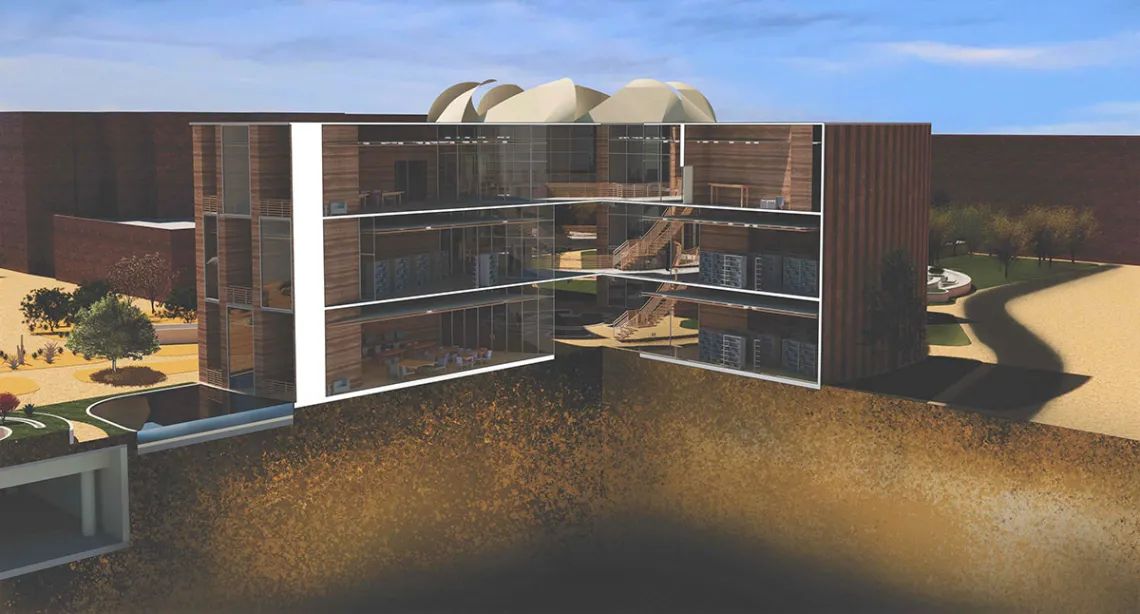
Section by Tulga N. Ericson.
Tell us a bit about your internship experience.
Right now, I’m interning at GLHN here in Tucson. Working for GLHN, I’ve learned more about the mechanical aspect as well as wall and hardware details in certain projects and buildings. Since we focus mostly on design aspects and concepts at CAPLA, this is nice insight into how the smaller things work and put together to make a grand project. To quote Michelangelo, “Trifles make perfection, and perfection is no trifle.”
What advice do you have for prospective B.Arch students?
Persistence is key! But this does not mean work until you’re exhausted. Take care of yourself and don’t jeopardize your health.


