

Design Negotiation: Greg Veitch '23 M.Arch
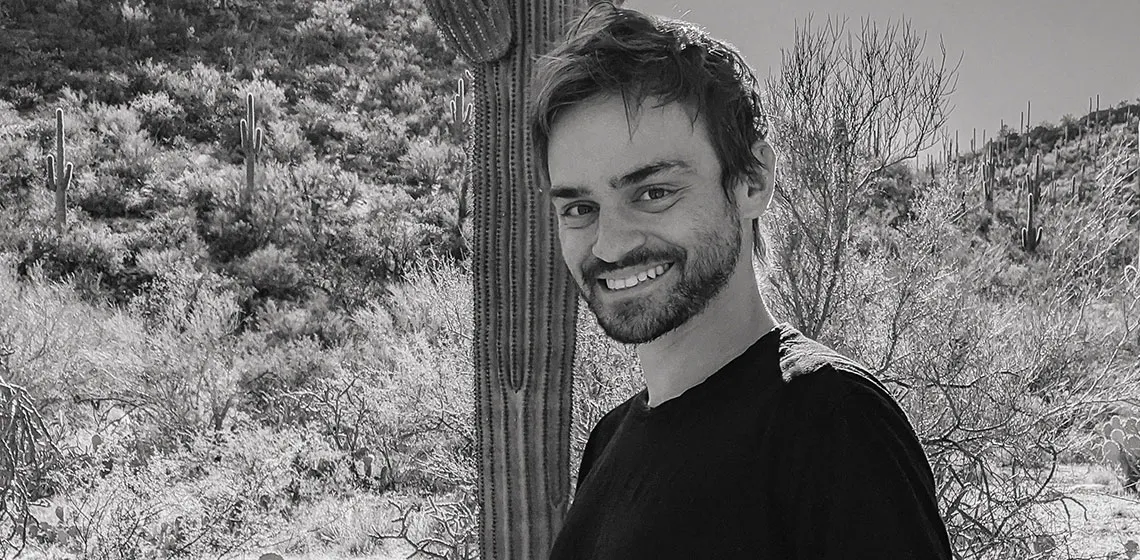
Seven Questions with Master of Architecture Student Greg Veitch
"The Sonoran Desert poses a unique design negotiation in our studies, and the M.Arch program encourages architecture based on performance criteria embedded in our diverse and extreme environment."
Greg Veitch, who is from New Haven, Connecticut, entered CAPLA's Master of Architecture program after receiving his undergraduate degree in English from the University of Connecticut. Prior to enrolling at CAPLA, he worked for two years at a design firm in Aspen, Colorado.
What brought you to the University of Arizona to study architecture?
Tucson has a heritage of site-sensitive architecture and a strong design/build culture. The University of Arizona takes advantage of the unique building climate in our historic desert city.
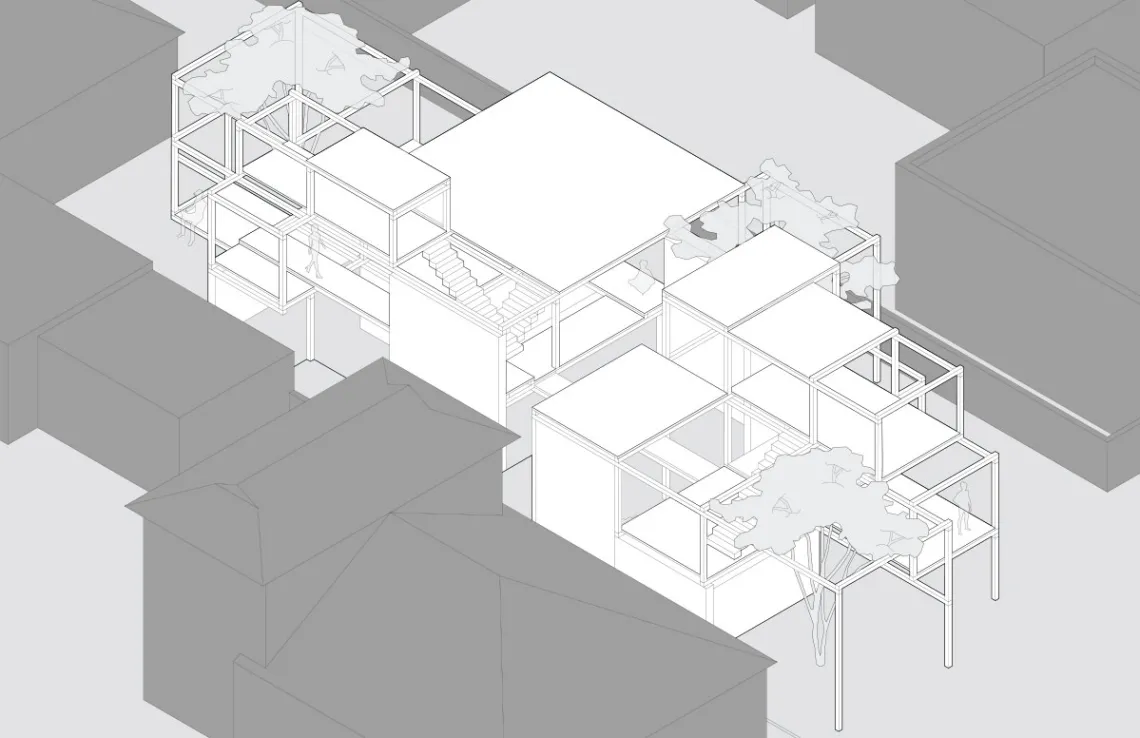
Tectnoic dwelling. Graphic by Greg Veitch.
Tell us about your interest in architecture.
I'm interested in ethical and passive design that considers the poetics and mysteries of the human experience. Re-imagining our modes of living in/with natural spaces is most interesting to me at this point.
What do you like best about the Master of Architecture program?
There is an ongoing conversation between the built and the theoretical in the M.Arch program. The Sonoran Desert poses a unique design negotiation in our studies, and the program encourages architecture based on performance criteria embedded in our diverse and extreme environment.
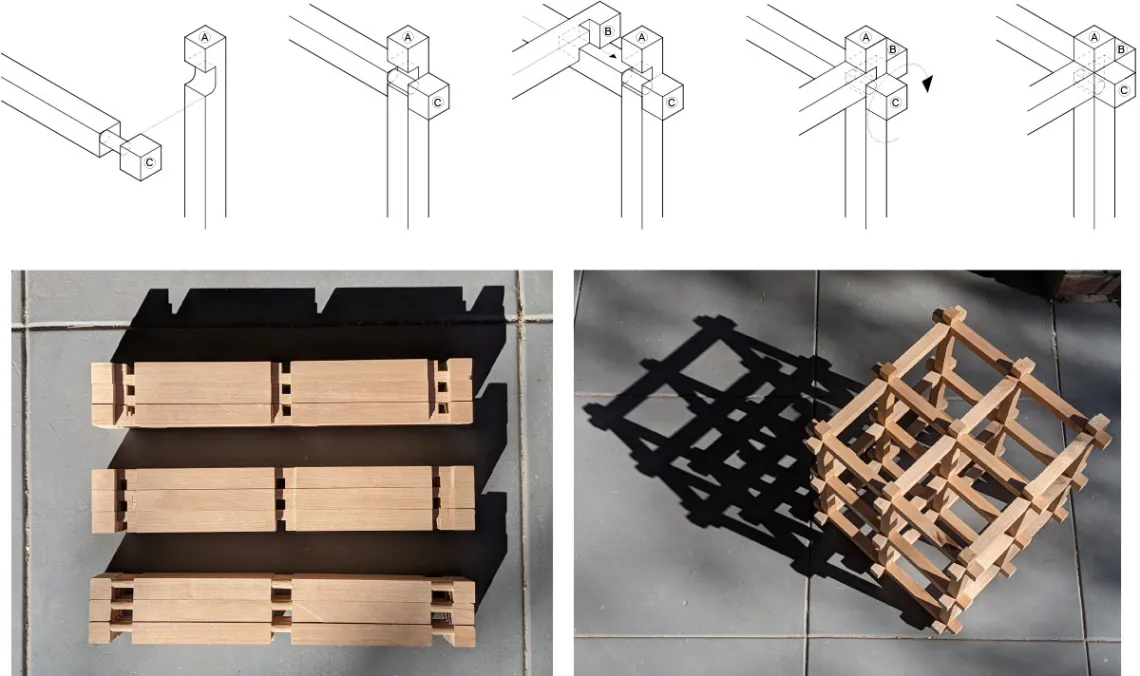
Joint construction. Graphic by Greg Veitch.
What has been the biggest challenge in your graduate studies so far?
The act of physical making has been challenging with restricted tool and lab usage during COVID. Online modalities have created physical distance between studio colleagues that has felt isolating and disorienting at times.
What does the CAPLA experience mean for you?
The intimate size of the M.Arch program creates a strong sense of support and collaboration. I am incredibly grateful for the amount of time and attention each of us of has with our instructors.
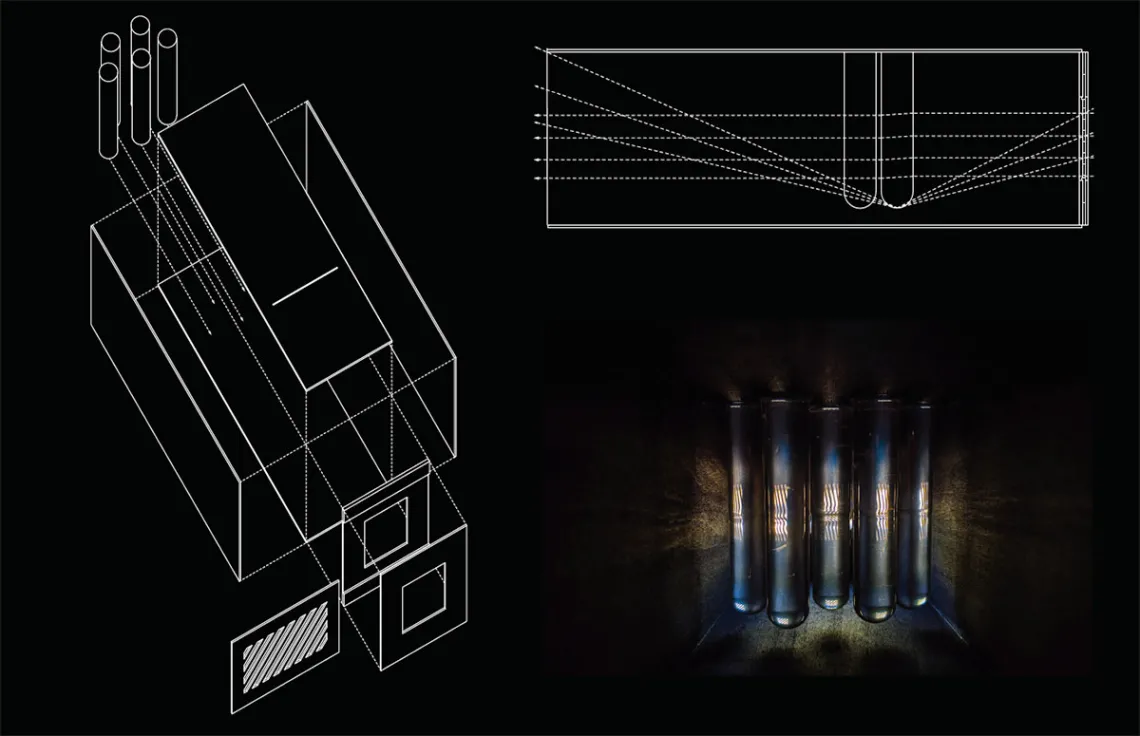
Refraction observation. Graphic by Greg Veitch.
Tell us about your job experience and career aspirations.
I worked at a design firm for a couple of years in Aspen, Colorado before returning to school for my M.Arch. Post-graduation, I aspire to be a registered architect, and to be able to have a career that allows me to always make work according to my values.
What advice do you have for prospective M Arch students?
Everyone has past experiences and convictions that tell the story of their conceptions of the built environment. These convictions allow you to focus your studies and lend a unique view into the discipline. Past experience generates future design solutions.


