

Urban Aquatic Conservatory: Morgan Oster '18 B.Arch

Urban Aquatic Conservatory, by Morgan Oster.
Image Gallery
Click a thumbnail below to view a larger image and begin slideshow:





Project Narrative
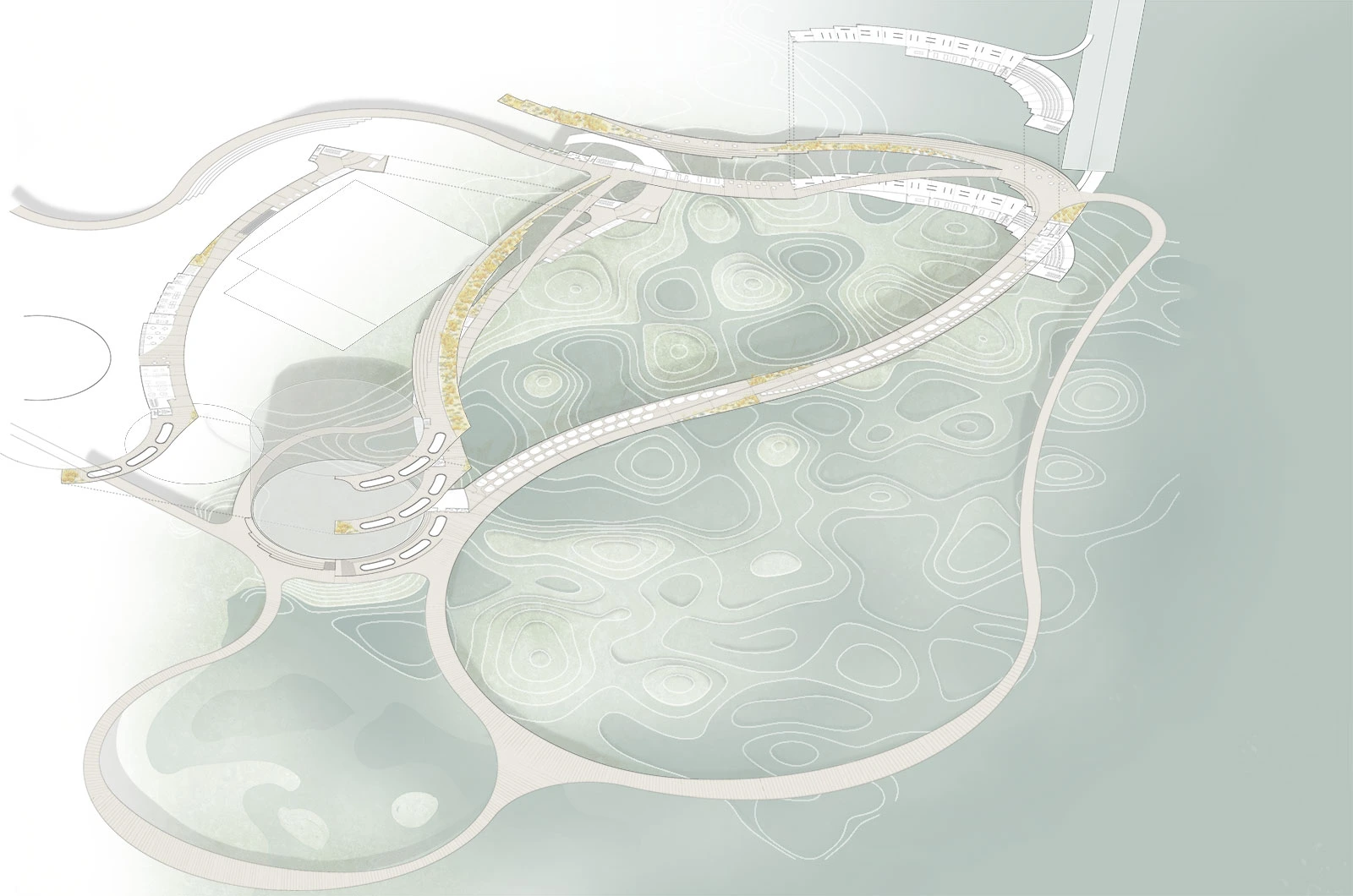
San Francisco’s Dogpatch neighborhood has a noticeable lack of a public cultural presence. Zoned as light industrial, the sense of place is deeply tied to production, creating great culture and color seen in geotagged Instagram photos. This hidden interior world is dramatically juxtaposed against the harsh, post-industrial pedestrian experience.
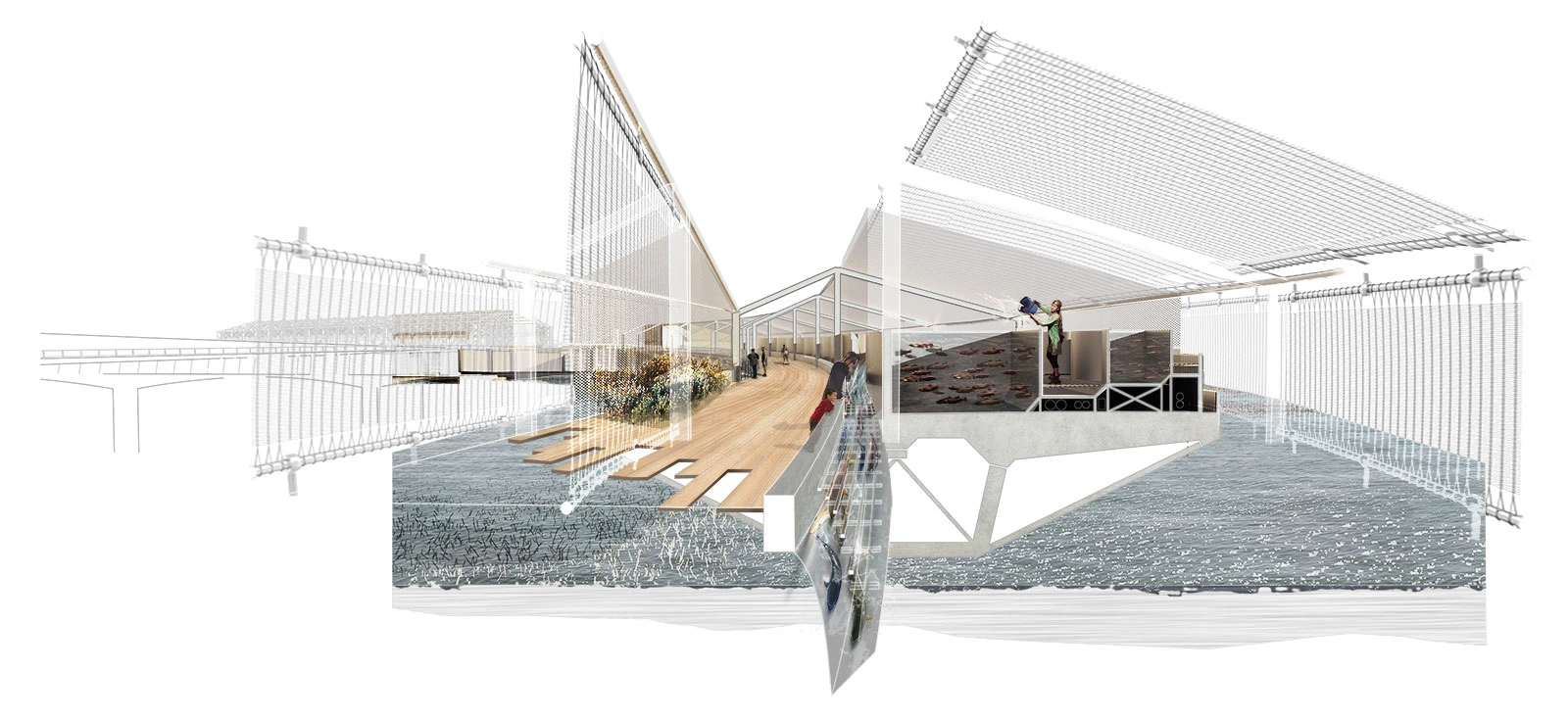
Much of the San Francisco Bay’s coastline and wetland habitat have been developed to support a soaring population as people flock to this dense urban center. This, in tandem with high levels of pollution, has caused imbalance in the estuary, resulting in many threatened or endangered native species. Challenging the understanding of an urban coastline, a gradient of water to land will blur the perceived boundary between the two. Acting as an absorptive sponge, vegetation will take the place of the extensive infill, combating rising sea levels and filtering runoff.
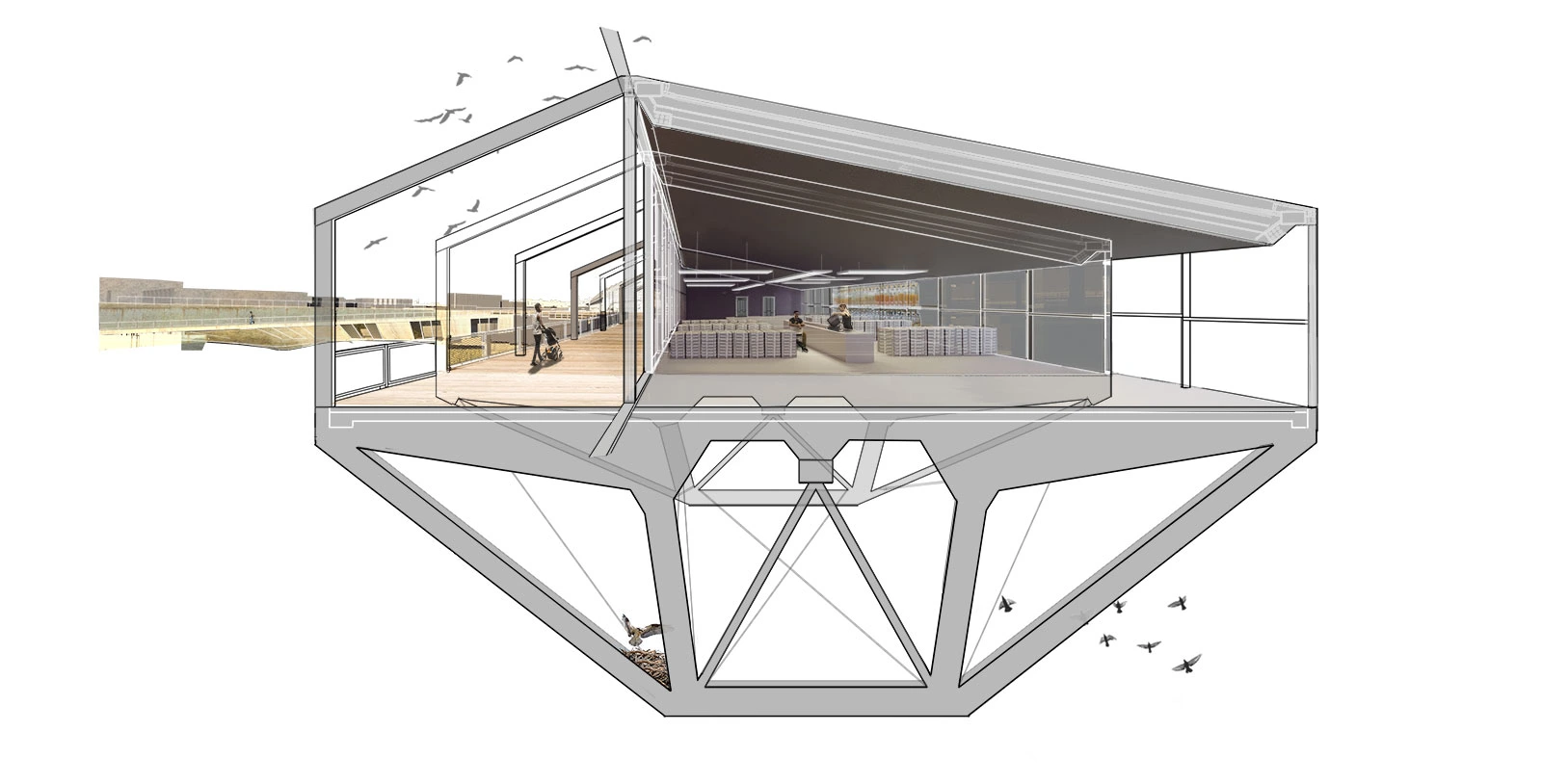
The synthesis of a culture centered on production and the need for ecological intervention and reparation resulted in the proposed program of a fish hatchery and wildlife research center. Although a typically rural typology, hatcheries have a strong didactic potential in an urban setting to educate the population on endangered species as well as the ecological effects of climate change and pollution.
All images are by Morgan Oster and may not be used or reproduced without express written permission of their creator.


