

Modular Design Technique for an Adaptive Cooling and Daylighting Roof Aperture System: Maryam Moradnejad '20 MS Arch
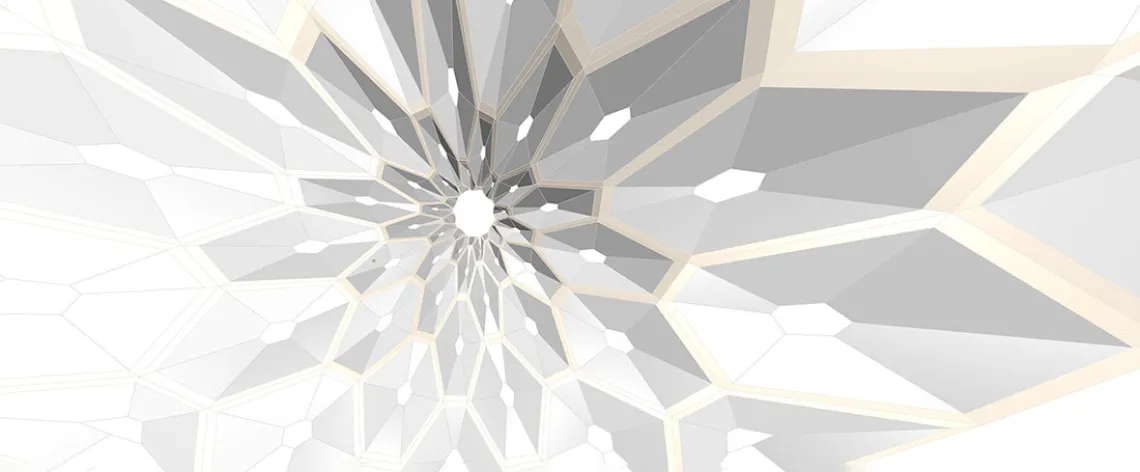
Maryam Moradnejad’s research addresses the adaptive functionality for a windcatcher through integrating unique materials such as hydrogel and phase-change materials (PCMs) into modular units for localized adaptive response. The research was developed based on the integration of two previous research initiatives: 1) adaptive roof aperture as an advancement on prior traditional windcatcher technologies, which provides dynamic response to the external wind directions and patterns to modulate the thermodynamic functions, and 2) the research that demonstrates the effectiveness of superporous polyelectrolyte hydrogels for water sorption and diffusion. In addition, the hydrogel provides multifunctional environmental response for evaporative cooling, natural daylighting and heat capacitance with radiative cooling because of the material structure and optical characteristics.
The proposed integration of the modular units into the windcatcher form will accommodate evaporative and radiant cooling, natural daylighting and water recuperation. Evaporative cooling is enabled for the daytime downdraft when the hot-dry airflow streams interface with a hydrogel membrane embedded at the top part of the windcatcher. During the night, the hydrogel membrane at top of the structure will remain unsaturated to assist stack-ventilation, night-flush cooling. The hydrogel membrane may also provide daylighting based on saturation states. A selection of modular units that have optimum sky-exposure incorporate PCMs to provide thermal storage during the day and radiative cooling at night.
The project also explores the potential for rainwater harvesting through the overall geometry and form to provide the system’s required water. Environmental analyses like solar radiation, daylighting and CFD were conducted to provide insight into the optimal relationships between windcatcher geometries for inducing adequate airflow and a self-shading geometry to increase the radiant cooling and decrease the heat exchange. The CFD simulations are performed to identify the spatial factors like windcatcher height and aperture diameters, which affecting the airflow behavior through the unique geometry.
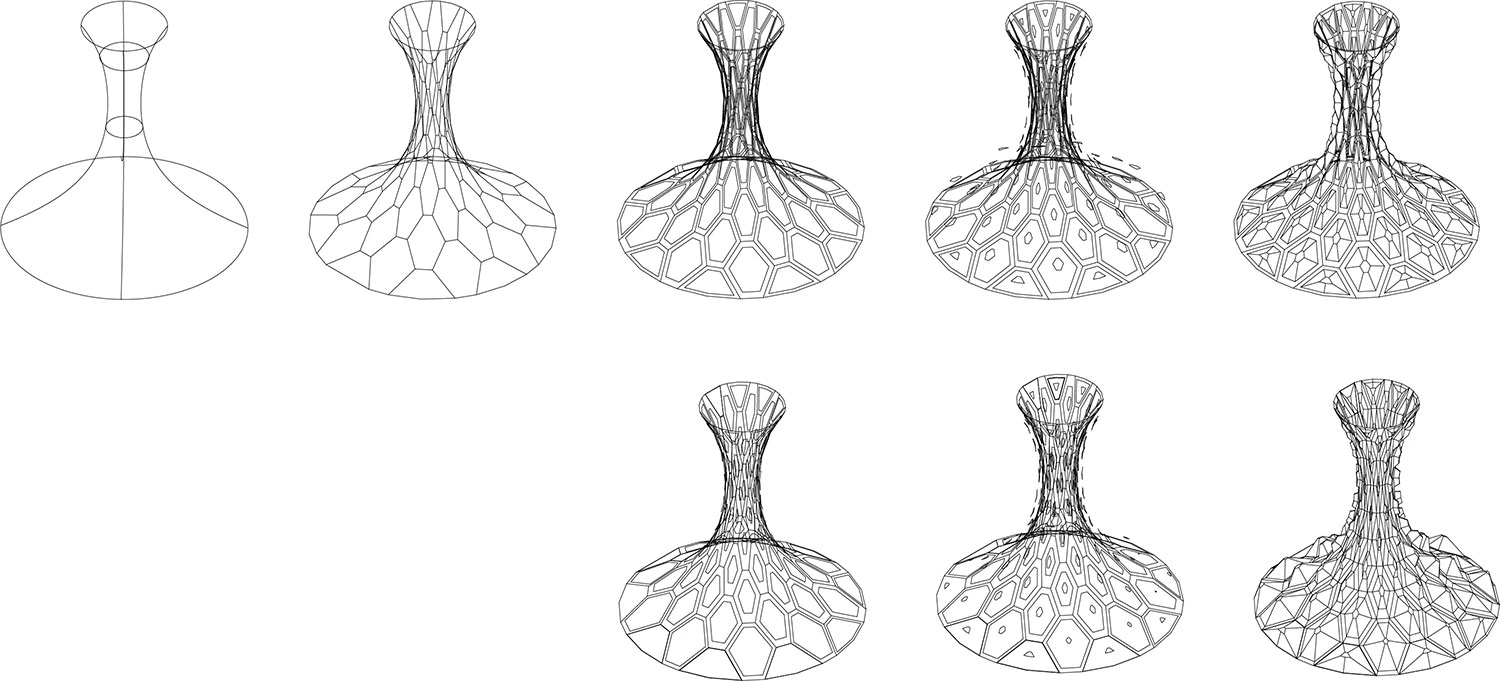
Ultimately, within a computational design process, the modules all over the shape were designed for holding the thermal mass. During the design process of modules, the defined parameters such as distribution, depth and the opening size of each module for sky cooling were linked to the solar radiation analysis. All these processes were performed to prevent the thermal mass materials to gain high radiation during the day and being as much as possible exposed to the sky during night.
Image Gallery
Click a thumbnail below to view a larger image and begin slideshow:




All images are by Maryam Moradnejad and may not be used or reproduced without express written permission of their creator.


