CAPLA Planning Professor Discusses the Rapid Growth in Small, Rural Communities Due to the Pandemic on NPR’s Morning Edition
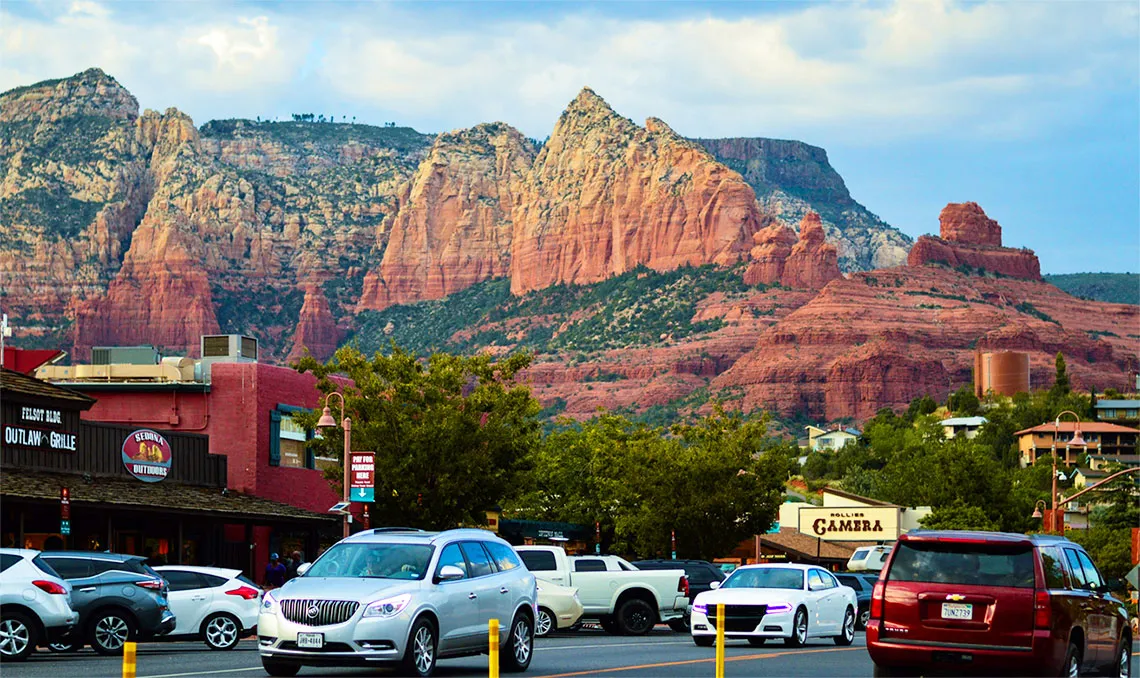
Traffic in Sedona, a gateway community in central Arizona that has seen rapid growth since the onset of the pandemic. Photograph by Philip Stoker.
Philip Stoker, assistant professor of landscape architecture and planning at the University of Arizona’s College of Architecture, Planning and Landscape Architecture, was interviewed in the January 21, 2022 episode of NPR’s Morning Edition: “The ramifications of exploding interests in small-town living during the pandemic.”
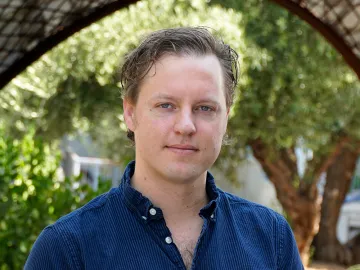
Philip Stoker, Assistant Professor of Landscape Architecture and Urban Planning
The conversation addressed how an increasing number of people are moving to small towns, particularly during the pandemic, to take advantage of less expensive housing.
“People who have jobs in larger cities that have higher incomes, if they can work remotely, can live in rural communities and still be able to work, assuming there’s the infrastructure for that,” says Stoker. “Then they’ll just have more money and higher buying power in the housing market.”
That’s a challenge for many long-time residents of the rural communities thanks to increased traffic congestion, a rising cost of living and a lack of affordable housing.
“These are big-city problems, but they’re being experienced in rural communities,” says Stoker.
Listen to the full interview on NPR.
Stoker has become an authority on the challenges facing small and gateway communities thanks to research on commuting patterns, housing affordability and traffic management funded by the National Institute for Transportation and Communities and conducted with researchers from the University of Utah.
His research has also been supported by several CAPLA graduate students, including Master of Urban Planning students Stephanie Smith and Ethan Wissler, MS Urban Planning alumna Lindsey Romaniello and Master of Landscape Architecture student Hunter Lohse.
Stoker, who joined CAPLA in 2015, researches urban water demand and the integration of land use planning with water management. He has conducted environmental and social science research internationally, including work with the World Health Organization, Parks Canada, the National Park Service and the Vancouver 2010 Olympic Games. Stoker holds a PhD in Metropolitan Planning, Policy and Design from the University of Utah.