Image

Meet CAPLA’s Paul D. Coverdell Fellow: Yamilkal Hernandez Sanchez
Yamilkal Hernandez Sanchez is a first-year MSUP student speaking on his Peace Corps experience.


Yamilkal Hernandez Sanchez is a first-year MSUP student speaking on his Peace Corps experience.
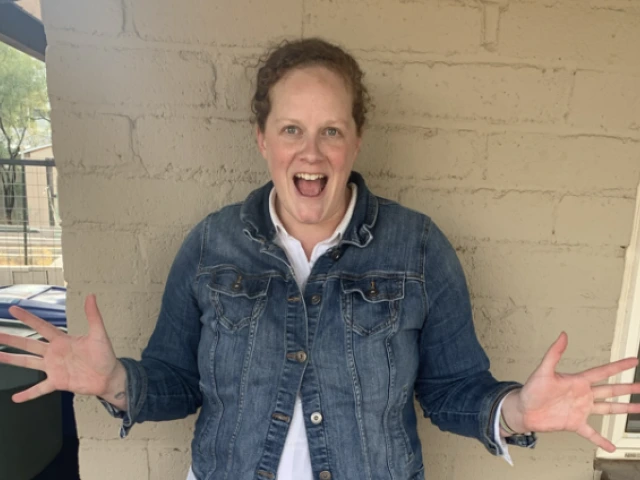
Associate Professor of Urban Planning Kristina Currans is taking on a new role as Master of Science in Urban Planning Program Chair. She has a vision for the program centered around the voices of students and consistency.

CAPLA faculty, students and researchers joined SCORCH’s Greenspaces and Health Photovoice Study, a participatory project that invited community members to document how parks, trees and other green spaces shape their health and daily lives. The collaboration highlights CAPLA’s interdisciplinary approach to research and design, connecting community voices, public health and the built environment.

As Tucson works to address its housing shortage, research from the University of Arizona's Drachman Institute is helping guide key policy decisions. Assistant Research Professor Bill Mackey's work on zoning, land use and housing regulations is providing city leaders with research-based options to increase housing opportunities across the city.

University of Arizona alumnus and faculty member Ladd Keith has become a nationally recognized leader in extreme heat resilience, translating research into policies that help communities adapt to rising temperatures. His work has shaped federal and international heat governance while advancing the university's land-grant mission of creating practical solutions for society.
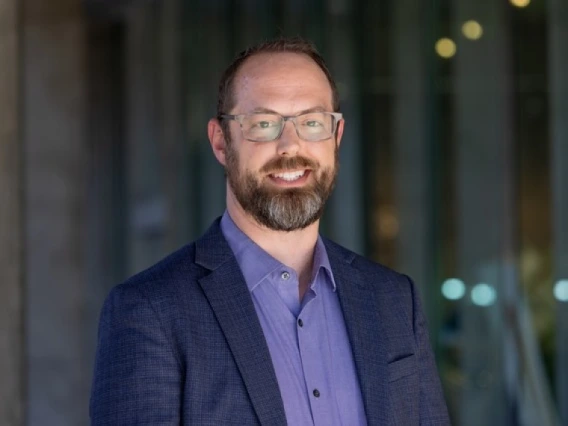
Ladd Keith, associate professor of planning, has received the 2026 University of Arizona Convergence Award for Excellence in Applied Research and Engineering for his interdisciplinary work advancing heat planning, policy and governance.

Huê-Tâm Jamme presents research exploring the deep behavioral roots and long-term impacts of U.S. car dependence on individual well-being and social equity.

Associate Professors Philip Stoker and Shujuan Li have received a two-year grant to support community scenario planning and long-term water supply strategies in Blaine County, Idaho, a rapidly growing gateway region facing increasing development and water resource pressures. By combining urban growth modeling, water demand forecasting and spatial analysis, their work will help local leaders understand how different development patterns could impact future water availability.

An engineered network of waterways flowing west from the Rockies sustains life in one of the hottest regions on Earth, forming a “cyborg watershed” that blends natural systems with human-made infrastructure and regional mythologies. Bon explored this system through her large-scale artworks, examining buried waterways, the complexities of policy and politics, and the pursuit of a civic identity shaped by water rather than boundaries.

Learn about ongoing work to preserve decorative finishes and restore missing and damaged elements of the retablo facade of Mission San Xavier del Bac. This work is supported by the Semiquincentennial Grant Program, administered by the National Park Service.

A CAPLA studio led by Senior Lecturer Joey Iuliano is turning student interest into action by focusing on improving walking and cycling conditions on campus. In collaboration with Parking & Transportation Services and the Office of Sustainability, students analyze crash data and develop design proposals for key campus corridors to improve safety and connectivity. Inspired in part by last fall’s fatal traffic crash near campus, the course aims to produce practical ideas that could inform future campus planning.

A report led by Associate Professor Philip Stoker and alumna Alyssa Fink delivers the most comprehensive climate assessment of Tucson Unified School District’s 2024 operations to date. The study establishes a greenhouse gas baseline and outlines strategies to reduce emissions, energy use and costs, supporting the district’s sustainability goals. Sponsored by Jobs With Justice, the project also highlights the impact of student-led, community-based research.