

Untangling Silos: Kristina Currans, Associate Professor of Urban Planning
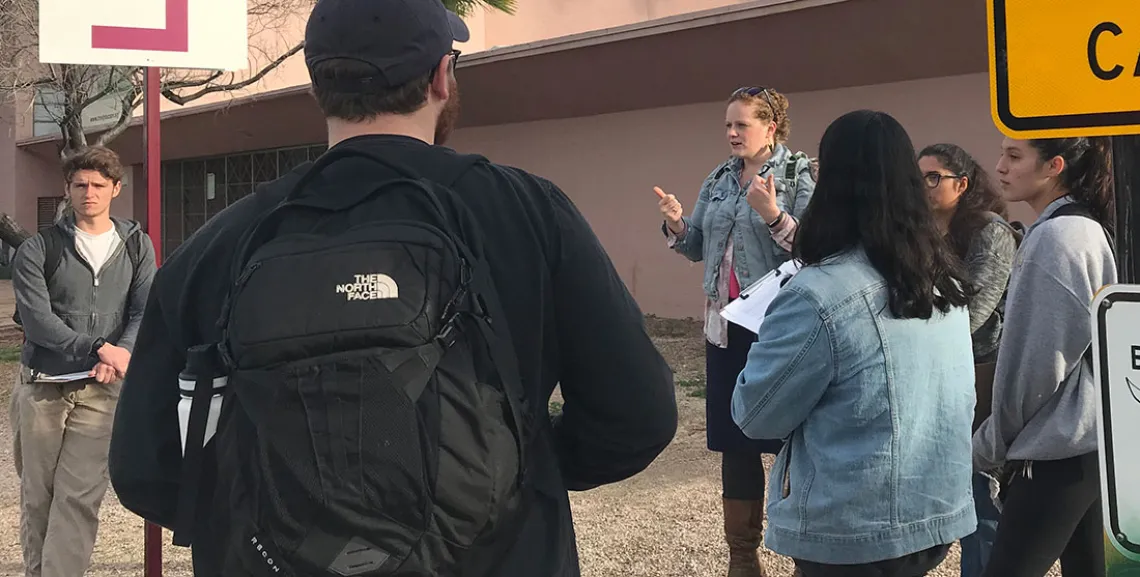
Kristina Currans teaches CAPLA students to observe electric scooter behavior along Tucson's Fourth Avenue in 2019.
Four Questions with Kristina Currans, Associate Professor of Urban Planning
“I come from a long line of DIY-ers, and that means that most of my free time is spent sketching out plans or steps to various experiments.”
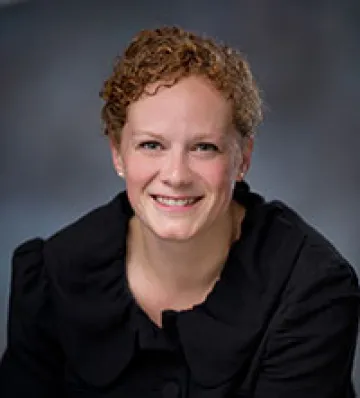
What brought you to the College of Architecture, Planning and Landscape Architecture, and when did you join the college?
I joined the college in 2017. I was looking for a good fit, amenable and supportive colleagues and an opportunity to dig deeper into questions with implications for travel behavior research as well as planning and engineering practices. I am trained as a civil engineer (BS, MS and PhD), so this was the only urban planning school I was originally considering. But after visiting with faculty, staff and students, I felt it was an extremely good fit in terms of my research, teaching and personal interests. It says something when you visit a university and everyone wants to tell you about the local hiking and food.
What is your current research and what most excites you about that research?
I am most excited about a two-year project with the California Department of Transportation (Caltrans). In this project, our goal is to link land-use development parking supply with vehicle demand and to operationalize this link for practice. California has several state mandates that aim to lower vehicle demand (and emissions) over the next few decades. One mechanism for lowering vehicle demand is through land use—by evaluating the vehicle impacts of new land-use development (like a retail store or a multifamily residential development) against some thresholds based on their goals. In research, we’ve known for a long time that unconstrained and free parking—which is often subsidized and sometimes encouraged by cities and developers—leads to increases in vehicle ownership and use. But few studies have been dedicated to exploring this link explicitly. Our study aims to quantify how parking supply leads to increased vehicle use, and how other alternative options (like transit, biking or walking) might help shift vehicle impacts into more efficient available modes. The project is part of a larger paradigm shift towards internalizing the often externalized costs of parking.
Tell us about your current practice.
I’ve been working on a multiyear project with the City of Portland where we’re incrementally improving their approach to how they charge and mitigate new land-use development for its impacts on the larger transportation system. While some of the work has simply been about collecting and analyzing new data to update their fee schedule, over the last few years this work has lead us down a much messier path of inquiry. With my business partner, Kelly J. Clifton, we are attempting to map the many ways that the configuration and mitigation of our collective everyday activities are measured, analyzed, evaluated and monitored in the transportation realm. In this work, our goal is to untangle the silos and relationships between the practical processes of evaluating transportation impacts in the public realm.
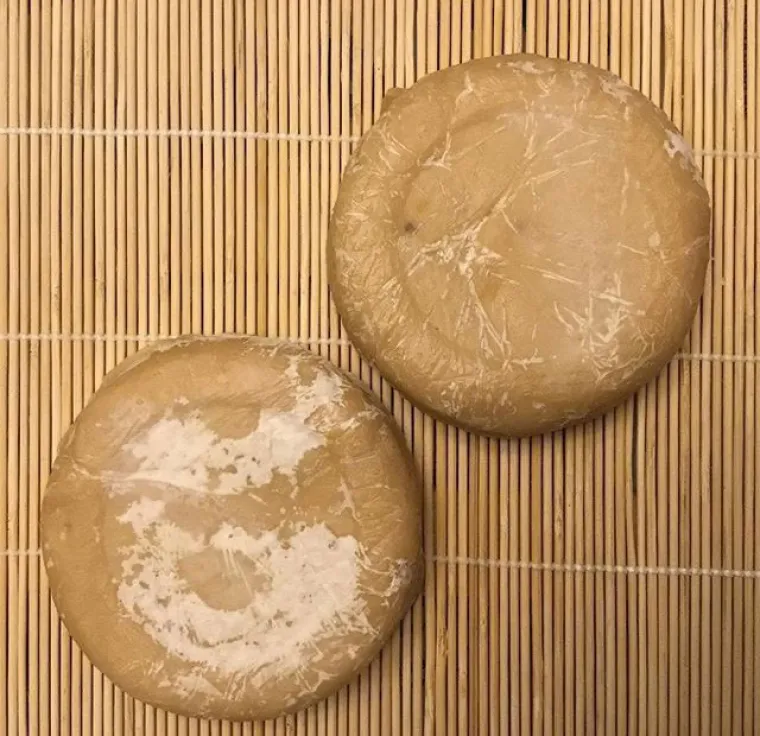
An experiment by Kristina Currans trying to age a cashew camembert cheese.
Beyond research and practice, what are your passions?
There is not enough space on the internet to cover the range and depth of all my interests and passions. I come from a long line of DIY-ers, and that means that most of my free time is spent sketching out plans or steps to various experiments. My current fascinations include, but are not limited to, growing/spinning/weaving/sewing green cotton, koji-cured and smoked meats and vegetables, veggie gardening (my thumb is actually more blue than green), rainwater harvesting, flagstone masonry, making picture frames, watercolor and Olympic and power lifting.
To learn more, view Kristina Curran's faculty page.


