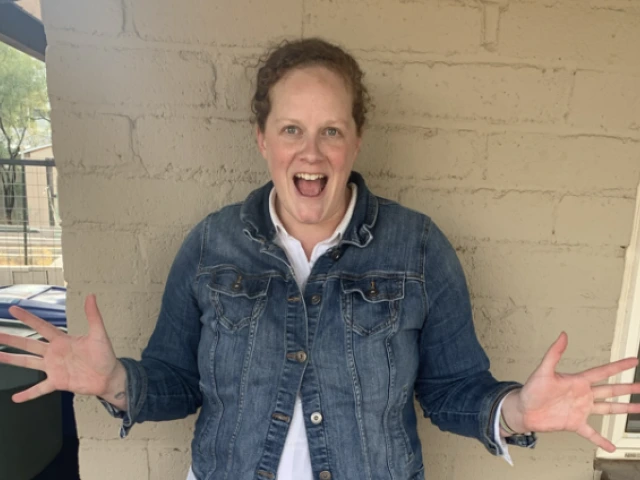
Meet CAPLA’s Paul D. Coverdell Fellow: Lyndsey Shafiei

Meet CAPLA’s Paul D. Coverdell Fellow: Lyndsey Shafiei!
Paul D. Coverdell Fellows are returned Peace Corps volunteers who receive financial assistance to pursue graduate degrees at universities across the country. In exchange, fellows complete internships in underserved American communities, applying the skills they learned abroad.
CAPLA has five Coverdell Fellows as of this fall:
- Yamilkal Hernandez Sanchez - 1st Year MSUP
- Lyndsey Shafiei - 1st Year M.Arch
- Tori Markle - 1st Year MLA
- Nick Ihley - 1st Year MLA
- Michael Geiger - 2nd Year MLA
We asked each of them about how this experience has shaped them, and how it led them from all corners of the globe to CAPLA.
Lyndsey, what inspired you to join the Coverdell Fellows program?
Shafiei: I was drawn to the Coverdell Fellows program because I wanted to weave community-centered work into my architecture studies. As Coverdell Fellows, we are required to complete an Outreach Assistantship during the school year, and I am excited to begin mine with Sky Island Alliance (SIA), a regional conservation nonprofit dedicated to protecting and restoring the biodiversity in the Sky Islands. I plan to incorporate environmental conservation strategies that I learn from SIA into my designs.
Where did you do your Peace Corps work? And why?
S: As a multiethnic person, I have always enjoyed cultural exchange, so I joined the Peace Corps for both intercultural collaboration and professional development. I served as a Peace Corps Volunteer in Onakalunga Village, Namibia from 2018 to 2020 as a STEM and health educator.
What did you find most valuable about your experience?
S: Collectivism is one of the most valuable lessons I learned during my time in Namibia. I both witnessed and experienced the efficiency and seamlessness of care, support and goal accomplishment that occurs when a community prioritizes the wellbeing and interests of all. I learned that projects are the most sustainable and intelligent when communities have ownership over them.
Why did you choose CAPLA to pursue a graduate degree?
S: CAPLA stood out to me as a design school because its strategic goals, which focus on people-centered design, interdisciplinary collaboration, adaptability, equity and environmental sustainability, closely align with my values and career goals. My conversations with faculty and completed projects highlighted on CAPLA’s website demonstrated that these stated goals were truly being put into action.
What do you hope to accomplish after earning your graduate degree?
S: I dream of becoming an architect who uses design as a tool for community empowerment and environmental stewardship. All humans deserve beautiful things, and I hope to co-create sustainable, affordable, high-performing and artistic built environments for the public.
How has your Peace Corps experience influenced your graduate studies and career goals?
S: I led a very passionate professional life in Namibia, and upon my return to the United States, my goal was to continue pursuing a career path that I felt passionately about. I spent about five years working at a public health research organization, and in that time, I realized I wanted to have a more direct impact on the physical environments that shape people’s health and wellbeing. The commitment I made to follow my heart professionally, along with the resilience I developed from the Peace Corps, gave me the courage to make a dramatic career change and move across the country to pursue a Master of Architecture.