
Will More Cities Hire a Chief Heat Officer? NBCLX Interviews Sustainable Built Environments Professor Ladd Keith

Los Angeles. Photo by David Mark, courtesy Pixabay.
Recently, Los Angeles, California became the third city in the United States, and just the fifth city in the world, to create a chief heat officer (CHO) position. Ladd Keith, assistant professor of urban planning and sustainable built environments in the College of Architecture, Planning and Landscape Architecture at the University of Arizona, worked with Los Angeles city staff on the CHO policy memo. On November 23, 2021, Keith was interviewed by NBCLX to discuss the role of CHOs and how cities are better preparing for extreme heat.
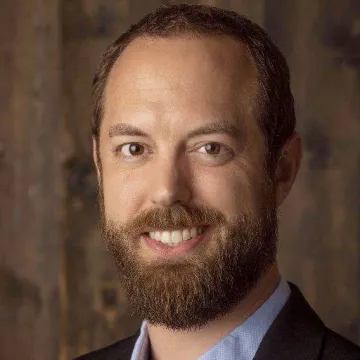
Ladd Keith, Assistant Professor of Planning and Sustainable Built Environments
In their introduction, NBCLX hosts Jobeth Devera and Nick Zecevic note that the main role of CHOs is to increase public awareness of heat dangers and help cities plan better for excessive heat waves, which are becoming more common. Indeed, extreme heat is the top weather-related cause of death in the U.S., according to the National Weather Service.
“Heat is increasing due both to climate change and the urban heat island effect,” says Keith in the interview. “How we plan and design cities makes them hotter than rural and natural areas, [resulting in] an inequitable impact on particularly marginalized and vulnerable people.”
Many heat mitigation efforts “are uncoordinated and siloed into urban planning or public health or emergency management,” continues Keith. “In most communities there is no ‘problem owner’ for heat, which is where the idea of a dedicated staff person like a chief heat officer comes in—to help coordinate those disparate issues and also bring more attention and awareness to heat as a risk.”
In his responses to questions by Devera and Zecevic, Keith additionally discusses why heat planning is underdeveloped in local governments, whether more heat officer positions will be created around the country and what local governments need to do better to plan for global warming.
Watch the full NBCLX interview: “Will More Cities Hire a Chief Heat Officer?”
Keith, who joined CAPLA in 2009, is an interdisciplinary researcher working at the intersection of urban planning and climate change to create more sustainable and resilient cities. He has over a decade of experience working with diverse stakeholders to solve complex urban challenges in cities across the U.S. His current research explores urban heat governance and how cities can increase heat resilience through the mitigation and management of heat. In addition to founding and leading CAPLA’s Bachelor of Science in Sustainable Built Environments, Keith teaches public participation and dispute resolution and climate action planning.