
Office of the Provost Grants Senior Lecturer Laura Carr $200,000 for Native People's Design Coalition
Oct. 24, 2023
Image
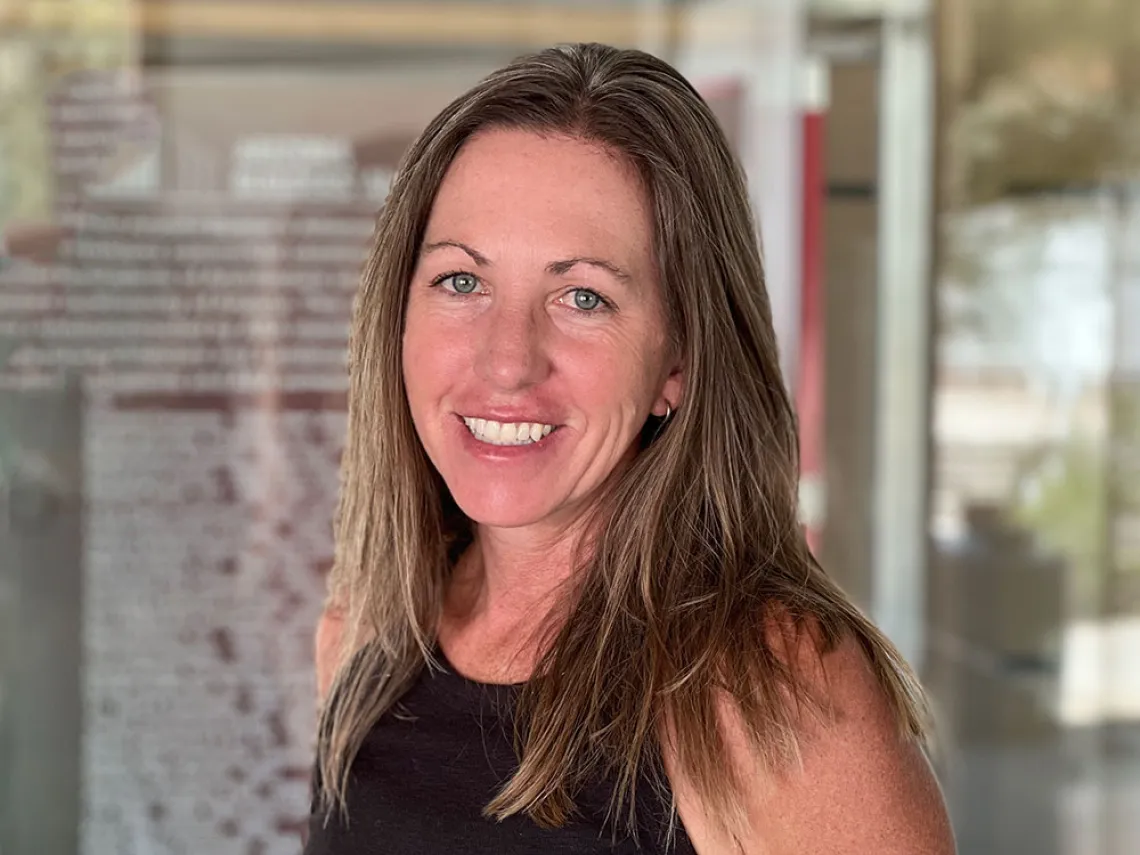
Laura Carr

Laura Carr, Senior Lecturer in Architecture


College of Architecture, Planning & Landscape Architecture’s Senior Lecturer in Architecture Laura Carr was part of the team that received a $200,000 grant for the Native People’s Design Coalition from the Office of the Provost

Carr, alongside Claudia Nelson, Trent Teegerstrom, and N. Levi Esquerra, was awarded the grant. She is a founding member of the Native Peoples Design Coalition, where she collaborates with tribal communities on sustainable and resilient built environment planning and design.

The Provost’s Investment Fund received 63 outstanding proposals and approved 10 for funding. A total amount of $1,572,600 was granted for two years. They seek proposals that are "innovative, aspirational, and explicitly aligned with the University's strategic plan and institutional priorities.”

“This is an exciting initiative that builds on the work of several faculty and students, over many years, and falls squarely in our commitment to advance our land grant status,” says CAPLA Dean Nancy Pollock-Ellwand.

Laura Carr is a senior lecturer in the School of Architecture, with over 15 years of experience in professional practice. Her extensive background includes work as a project manager for the Drachman Institute and the manager of Drachman's Architecture Technical Assistance Program. In 2007, Laura transitioned to residential project design with Taylor Design Build and later became a project architect at Nelsen Partners in 2011, specializing in mixed-use retail, office, and hospitality projects. She returned to teaching in 2017, focusing on cross-disciplinary instruction and community outreach within CAPLA and the university. She serves as chair of the school's Practice Stream, is a member of the Drachman Institute Faculty Executive Board, and is a Dean’s Equity and Inclusion Initiative Fellow. 


Subscribe to The Studio

Sign up for CAPLA's monthly e-newsletter to get the latest news and events, insights from faculty and leadership, profiles of students and alumni and more.

Subscribe Now

Latest CAPLA News, Projects and Profiles

Image
Group photo of four CAPLA students who are members of the ISAPD

CAPLA to host Indigenous Design Symposium focused on community, sustainability

CAPLA’s Indigenous Society of Architecture, Planning and Design (ISAPD) will host an all-day symposium on April 6, bringing together students, faculty and practitioners to explore Indigenous approaches to the built environment. Featuring Indigenous designers and supported by campus partners, the event will highlight community-centered design, sustainability and the role of Indigenous knowledge systems in shaping more responsible relationships with land.

Image
Six students and faculty work together to lift the frame of a wall for a house they are building in Agua Prieta

CAPLA students build housing in Agua Prieta during spring break

CAPLA students spent spring break in Agua Prieta, Sonora, building a home for a local family in partnership with Rancho Feliz. Working alongside community members, they gained hands-on construction experience while contributing to a reciprocal housing program designed to address affordability and climate-responsive design.

Image
Jackie Hogan Headshot

Research-Based Approach to Architecture: Jackie Hogan M.Arch + MS.Arch ‘25

Jackie Hogan (’25 M.Arch + MS.Arch) is a dual-degree graduate of CAPLA whose work bridges architectural practice and research-driven design. Drawn to architectural history, theory and ethics, she pursued the M.Arch + MS.Arch dual degree to explore how research can shape meaningful design decisions. During her time at CAPLA, she engaged in community-centered design through Laura Carr’s studio working with the Tuba City community and completed a thesis examining architecture’s role in disaster relief and climate-related emergencies. Now working at Line + Space, Hogan brings an evidence-based approach to projects, applying research to create thoughtful spaces that connect people, culture and the environment.