Cookbook Creation: Ella Parsons ‘27 B.Arch
CAPLA student Ella Parsons ('27 B.Arch) shares her ecological “cookbook,” blending art, architecture, and ecology to explore site, narrative, and design through experimental methods.
Jackie Hogan (’25 M.Arch + MS.Arch) is a dual-degree graduate of CAPLA whose work bridges architectural practice and research-driven design. Drawn to architectural history, theory and ethics, she pursued the M.Arch + MS.Arch dual degree to explore how research can shape meaningful design decisions. During her time at CAPLA, she engaged in community-centered design through Laura Carr’s studio working with the Tuba City community and completed a thesis examining architecture’s role in disaster relief and climate-related emergencies. Now working at Line + Space, Hogan brings an evidence-based approach to projects, applying research to create thoughtful spaces that connect people, culture and the environment.
A CAPLA studio led by Senior Lecturer Joey Iuliano is turning student interest into action by focusing on improving walking and cycling conditions on campus. In collaboration with Parking & Transportation Services and the Office of Sustainability, students analyze crash data and develop design proposals for key campus corridors to improve safety and connectivity. Inspired in part by last fall’s fatal traffic crash near campus, the course aims to produce practical ideas that could inform future campus planning.
A report led by Associate Professor Philip Stoker and alumna Alyssa Fink delivers the most comprehensive climate assessment of Tucson Unified School District’s 2024 operations to date. The study establishes a greenhouse gas baseline and outlines strategies to reduce emissions, energy use and costs, supporting the district’s sustainability goals. Sponsored by Jobs With Justice, the project also highlights the impact of student-led, community-based research.
Professor Beth Weinstein has been promoting her 2024 book on collaborations between architects and choreographers across Europe while researching the Centre d’Identification de Vincennes (CIV), a former internment site in Paris. Her work combines archival methods and community engagement through lectures, walks, and publications, aiming to raise awareness and achieve official recognition of the CIV as a memorial site.
Christopher Tucker, a lecturer in architecture at CAPLA, received the American Institute of Architects’ Design Pedagogy Award for his Abiotic Studio, a fourth-year course that challenges students to engage with ecological realities and reimagine post-industrial landscapes through more-than-human perspectives.
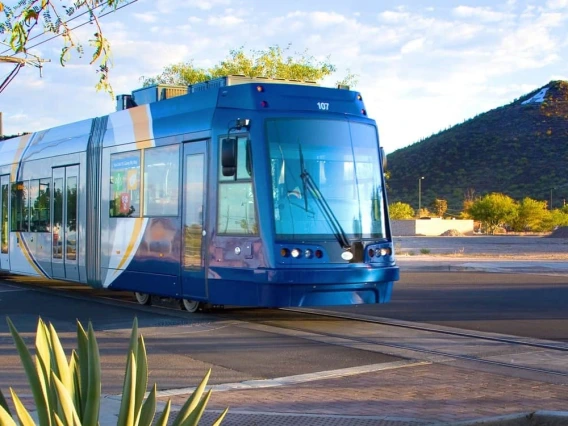
A new study co-led by CAPLA’s Arthur C. Nelson and the City of Tucson’s Daniel Lawlor finds that the Sun Link streetcar has reshaped Tucson’s growth, economy, and equity since its 2014 launch, driving major real estate investment, population growth, and city revenue gains. The research, to be published in the Harvard Law & Policy Review, highlights the streetcar as a national model for successful urban transit planning.
The College of Architecture, Planning and Landscape Architecture has awarded the 2025 Grassroots Seed Grants to three faculty-led projects that advance innovative teaching, research, and creative activity.
CAPLA’s Drachman Institute brought together experts from across the Southwest for a two-day workshop focused on advancing Net Zero Urban Water—an approach where cities meet water needs through sustainable, local sources without harming long-term supplies or ecosystems.
CAPLA Associate Professor Philip Stoker is advancing research on heat resilience with a new study highlighting how residents of mobile and manufactured housing in Arizona’s urban areas face heightened vulnerability to extreme heat due to limited access to vegetation and land ownership.
CAPLA researchers are leading efforts to ensure community sustainability and equitable growth in Santa Cruz County as part of a university-led, cross-disciplinary study funded by South32.