CAPLA announces 2026 Grassroots Seed Grant Awardees

The College of Architecture, Planning and Landscape Architecture is proud to announce the recipients of the 2026 Grassroots Seed Grants, which support innovative teaching, research, scholarship, and creative activity.
The Grassroots grants are part of the Dean’s strategic investment to advance CAPLA’s Strategic Plan. This year’s awardees represent a range of projects that address pressing social, environmental, and economic challenges.
“For some years now, the Teaching Innovation Seed Grant has facilitated new teaching collaborations and platforms, often capitalizing on faculty members’ research or practice while extending new opportunities to students to work with diverse community partners,” said Laura Hollengreen, Associate Dean for Academic Affairs.
“I am very pleased that this continuing College initiative has produced exactly what was intended- collaborations across programs, the seeding of bigger projects, and innovations in teaching, research and community outreach. Congratulations to the 2026 recipients; and thank you as well to the reviewers and the Associate Deans who do this work for our community,” said Nancy Pollock-Ellwand, Dean of CAPLA.
2026 Grassroots Teaching Innovation Seed Grant
Project: Engaging CAPLA Students in the Design of Minnesota’s Expo 2031 Team: Lisa Schrenk

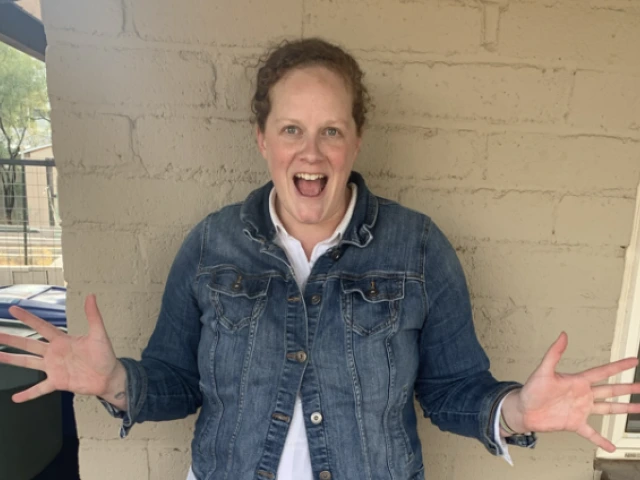
Lisa Schrenk, Professor of Architectural History.
Project summary: The proposed 2026 CAPLA Grassroots Teaching Innovation Seed Grant will directly support an interdisciplinary seminar to be offered in Fall 2026 in connection with Minnesota’s upcoming world’s fair. This seminar will serve as the first step in a sustained, multi-year effort to engage CAPLA students in the planning and realization of the 2031 World Horticultural Exposition—a six-month international event expected to attract millions of visitors and showcase American innovation in sustainable design, accessibility integration, and horticultural architecture. Expo 2031 is especially significant as it is the first world’s fair to be held in the United States since 1984 and the first Bureau International des Expositions (BIE)-sanctioned horticultural exposition ever to be held in this country. Because the upcoming fair is a world horticultural exposition, with the theme Human/Nature: Where Humanity and Horticulture Meet, this initiative is ideal for a truly interdisciplinary engagement of CAPLA students on a real-world global project. The proposed course is envisioned as the foundation for a five-year sequence of experiential opportunities, including a studio course, internships, and professional employment connected to the event.
2026 Grassroots Research Innovation Seed Grant

Laura Carr
Project: Asset Based Co-Design for Economic Sovereignty on the Navajo Nation
Team: Laura Carr, Gregory Veitch

Project summary: The Navajo Generating Station, located on Navajo Nation land outside Page, Arizona, closed in 2019, eliminating hundreds of jobs and millions of dollars in annual revenue for Navajo communities. The four Navajo Chapters nearest the plant site face a critical question: how to rebuild economic self-sufficiency in a post-coal economy? Due to land tenure on reservations, the Navajo Nation relies on sales tax rather than property tax for revenue; thus, economic prosperity depends on commercial transactions occurring on Tribal land. Page, Arizona generates $235 million annually in tourism revenue, yet Navajo communities capture very little of this economic activity. This failure stems not from lack of opportunity but from lack of community-driven vision: externally-driven planning processes have produced assessments without building local capacity to identify assets, align development with community values, or implement actionable strategies. This research proposes a novel method for co-designing economic development strategies that center community goals, values, and existing capacities.
The project pairs Asset-Based Community Development methodology, which systematically inventories community assets rather than cataloguing deficits, with Indigenous co-design principles that position communities as authorities over their own development. Unlike conventional planning approaches that match problem identification with built environment solutions, this framework begins by building on assets that communities already have. Facilitators transfer knowledge and skills to Chapter staff, creating sustainable capacity beyond the project period. Outcomes include community-owned strategic frameworks for each participating Chapter, a methodology applicable to Indigenous communities facing post-extractive transitions, and documentation positioning Chapters to pursue federal funding with locally-developed priorities.
2026 Grassroots Scholarship and Creative Activity Seed Grant

Project: Cross-Border Landscape Learning Lab: Designing Companion Spaces between Naco, Arizona and Naco, Sonora
Team: Sandra Bernal, Helen Erickson
Project summary: We propose a hands-on, cross-border learning lab in partnership with the Naco Heritage Alliance (NHA) to engage CAPLA students in collaborative research and design between Naco, Arizona and Naco, Sonora. Students will experience nonprofit governance (board roles, decision-making), receive landscape survey training, and produce site analysis plus conceptual landscape designs that link Camp Naco to companion public spaces across the border.

Helen Erickson, Heritage Conservation Program Project Director.
Core activities include viewshed studies, sculpture siting with anti‑vandalism strategies, green–gray infrastructure assessment, and walkability/shade/planting analysis, framed by pre‑design lecture sessions with six domain experts. This project interprets a historically significant borderspace in a uniquely creative way, transforming heritage and infrastructure challenges into an innovative design vision that connects two communities across an international boundary.
“These projects build CAPLA's pipeline of scholars addressing complex challenges in the built and natural environments, serve our communities and partners, and provide valuable training opportunities for students who make real-world impact,” said Bo Yang, associate dean of research for CAPLA.